Resonance
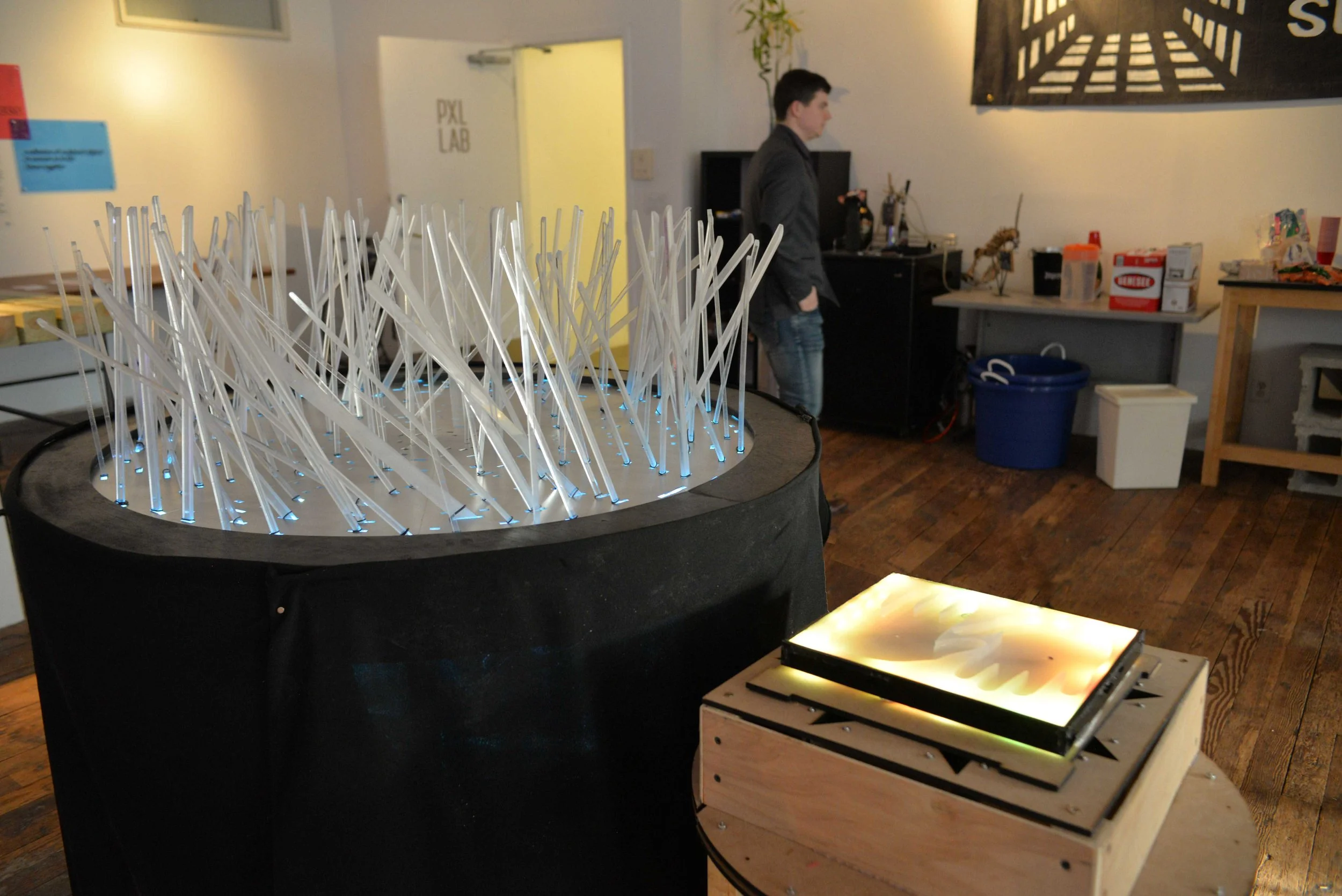
A field of kinetic and illuminated fronds that react to the synchronization of two heart beats.
Role:
Lead Designer
Responsibilities:
Mechanical and interaction design and fabrication
Project Duration:
1 months
Final Deliverable:
Countable was developed by myself, Cole McKnight, Jenna Borges, and Xing Gao during graduate school at the University of Pennsylvania.
Objective
Research
Design & Technology
Inspired by pieces like David Rozin's mechanical mirrors and MIT Media Lab's Transform, my team was driven to bring an installation to the public that could show them the tangible connection between digital and analog.
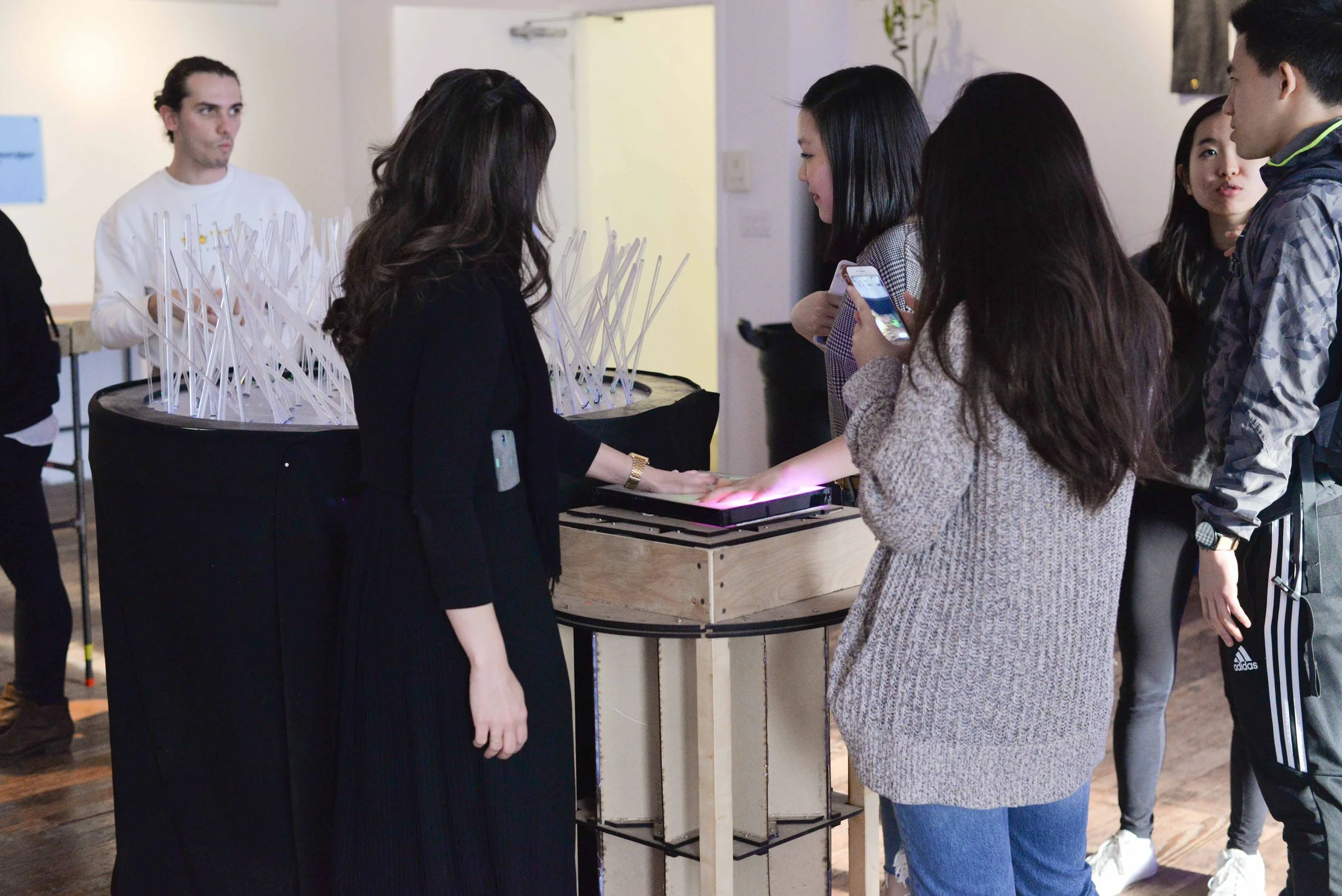
We wanted to create a tangible representation of human connection through cooperative interaction.
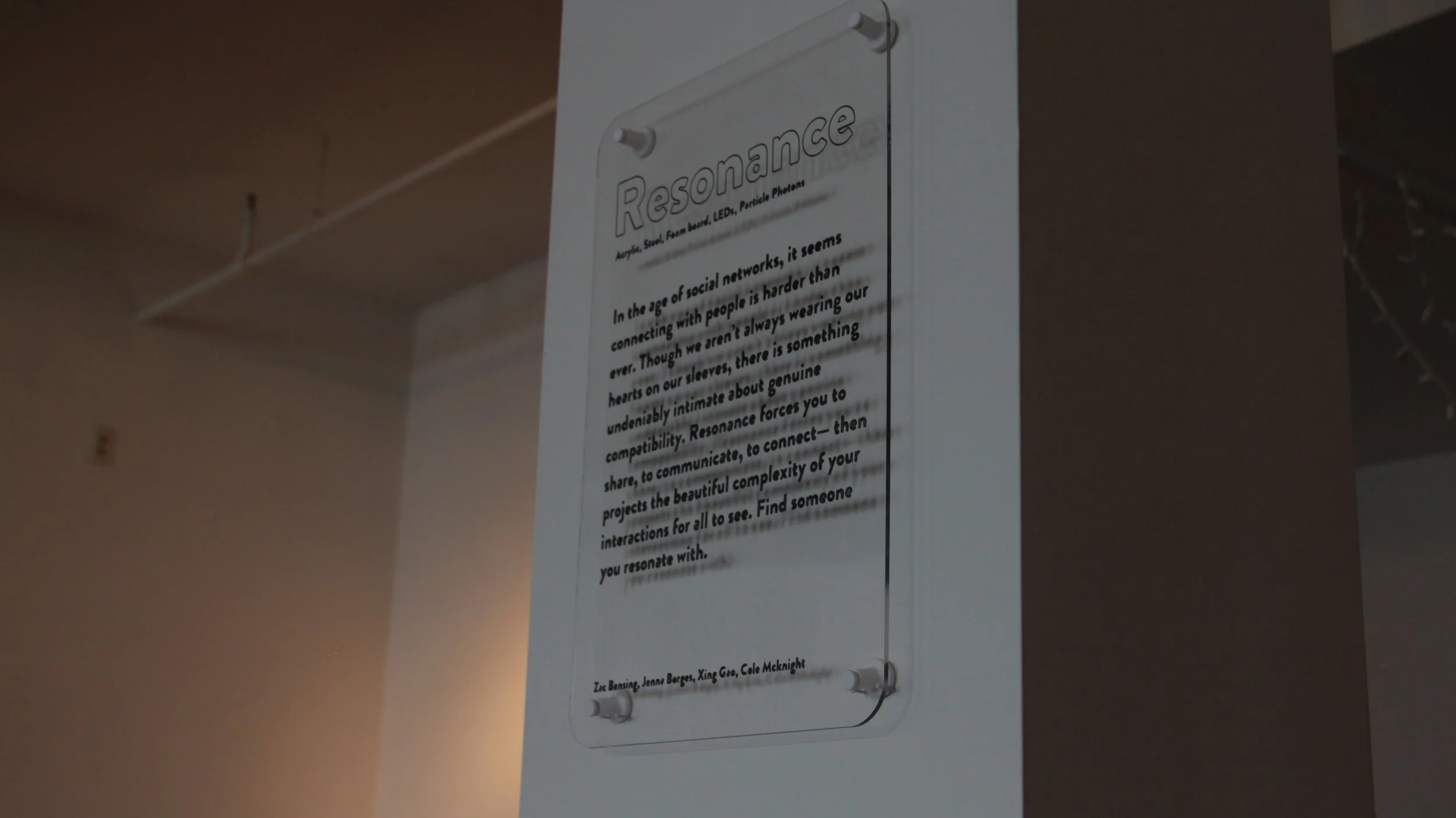
In the age of social networks, it seems connecting with people is harder than ever. Though we aren't always wearing our hearts on our sleeves, there is something undeniably intimate about genuine compatibility. Resonance forces you to share, to communicate, to connect - then projects the beautiful complexity of your interactions for all to see and lets you find someone with whom you resonate.
Our antagonist was the smartphone. With the alarming amount of interaction people have with their screens, we realized it renders them increasingly disconnected with the physical objects and people around them. This creates an absence of emotional association or distinct memory with those objects and people. With this in mind, we set out to create a medium that gave people a face to face interaction with a physical interface to drive connection.
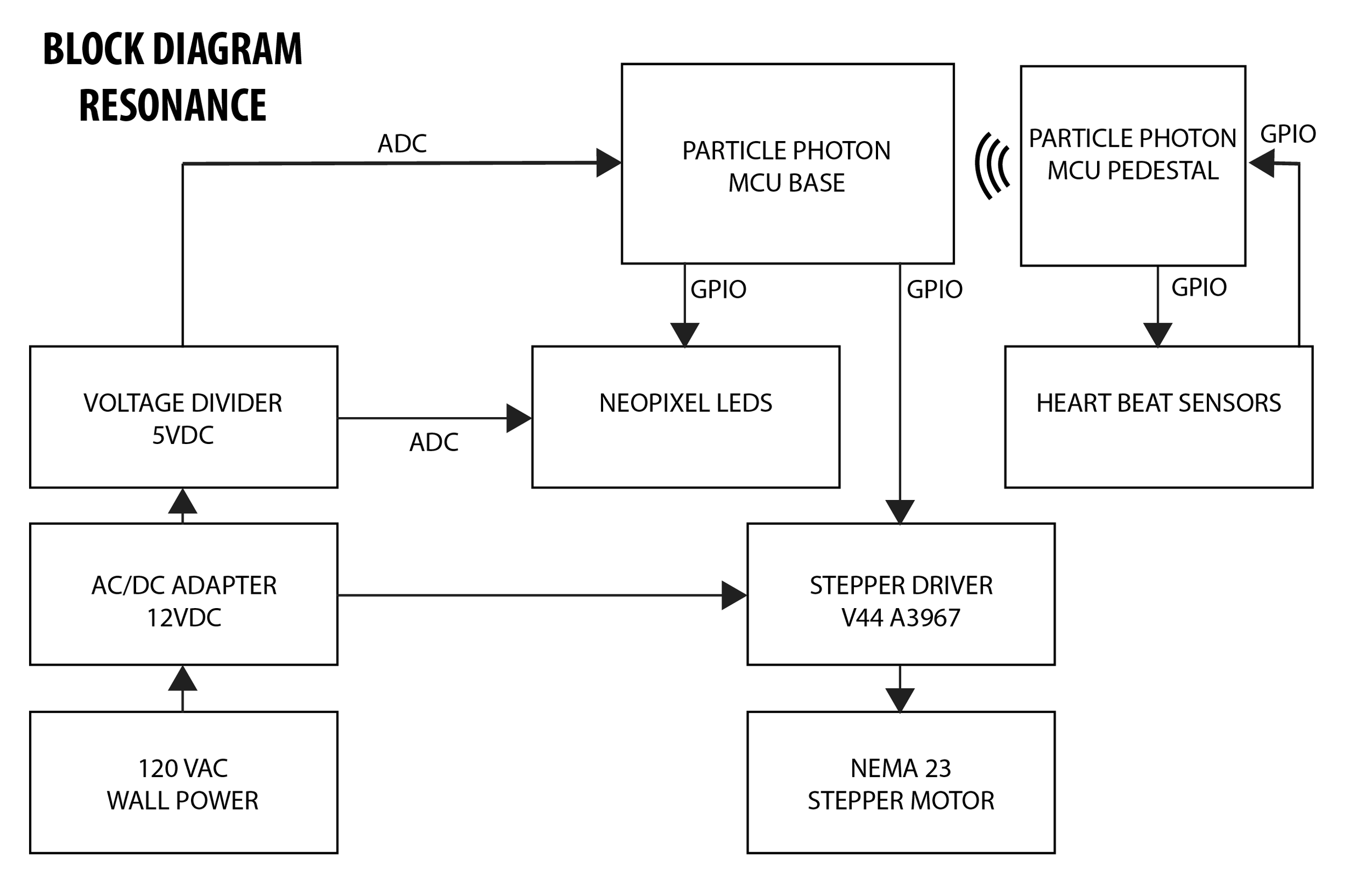
In designing our installation, we had two main components:
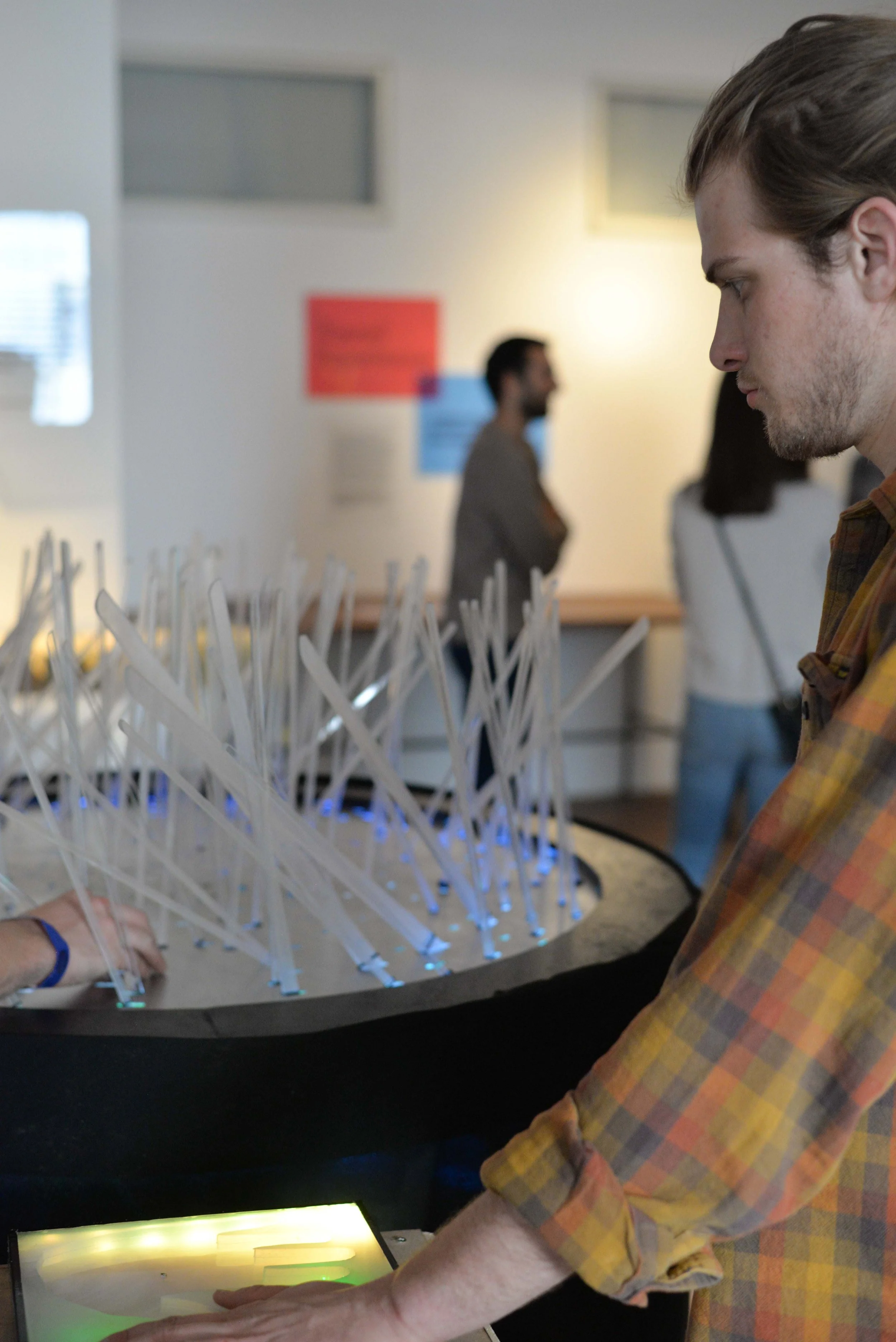
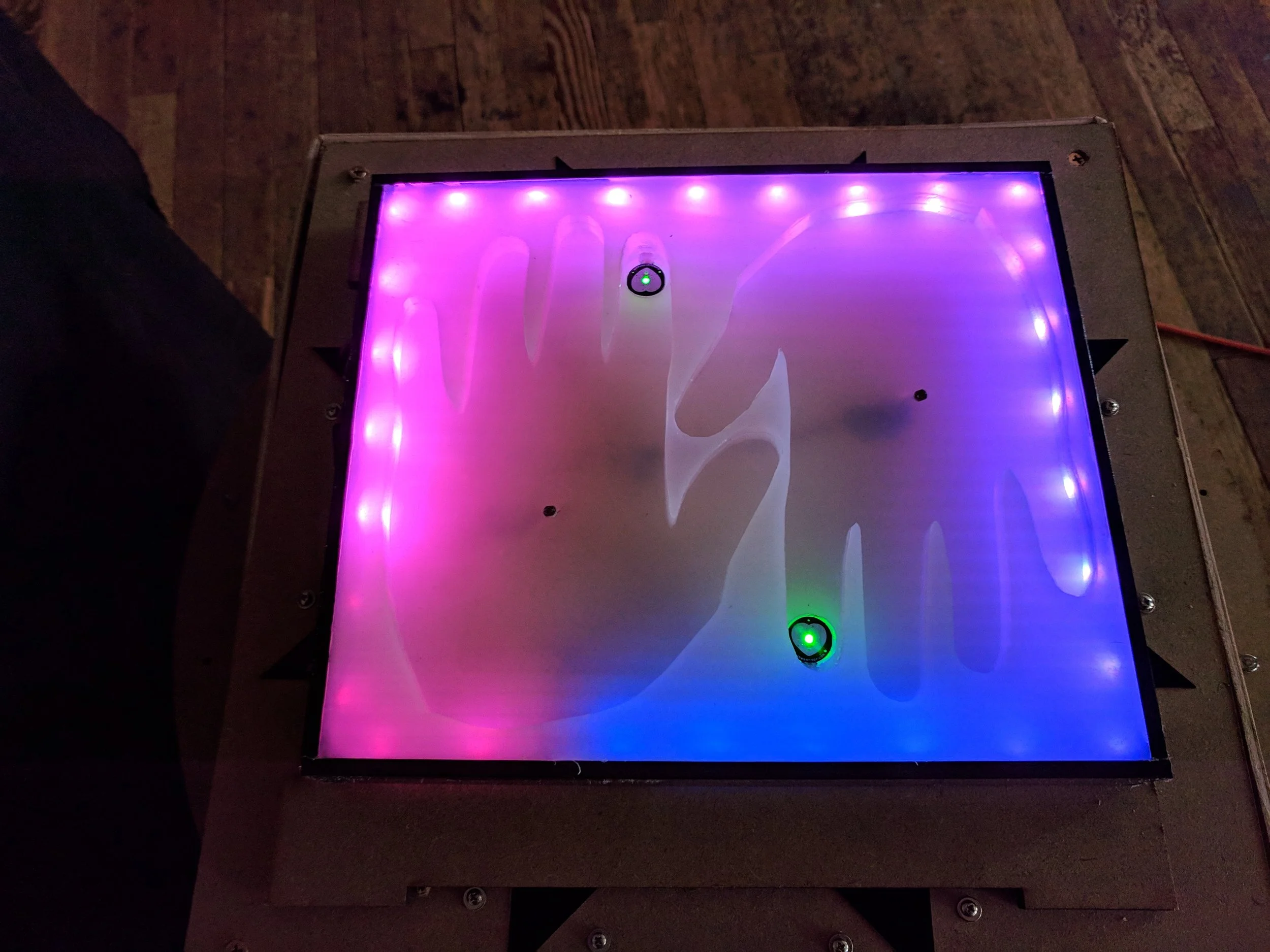
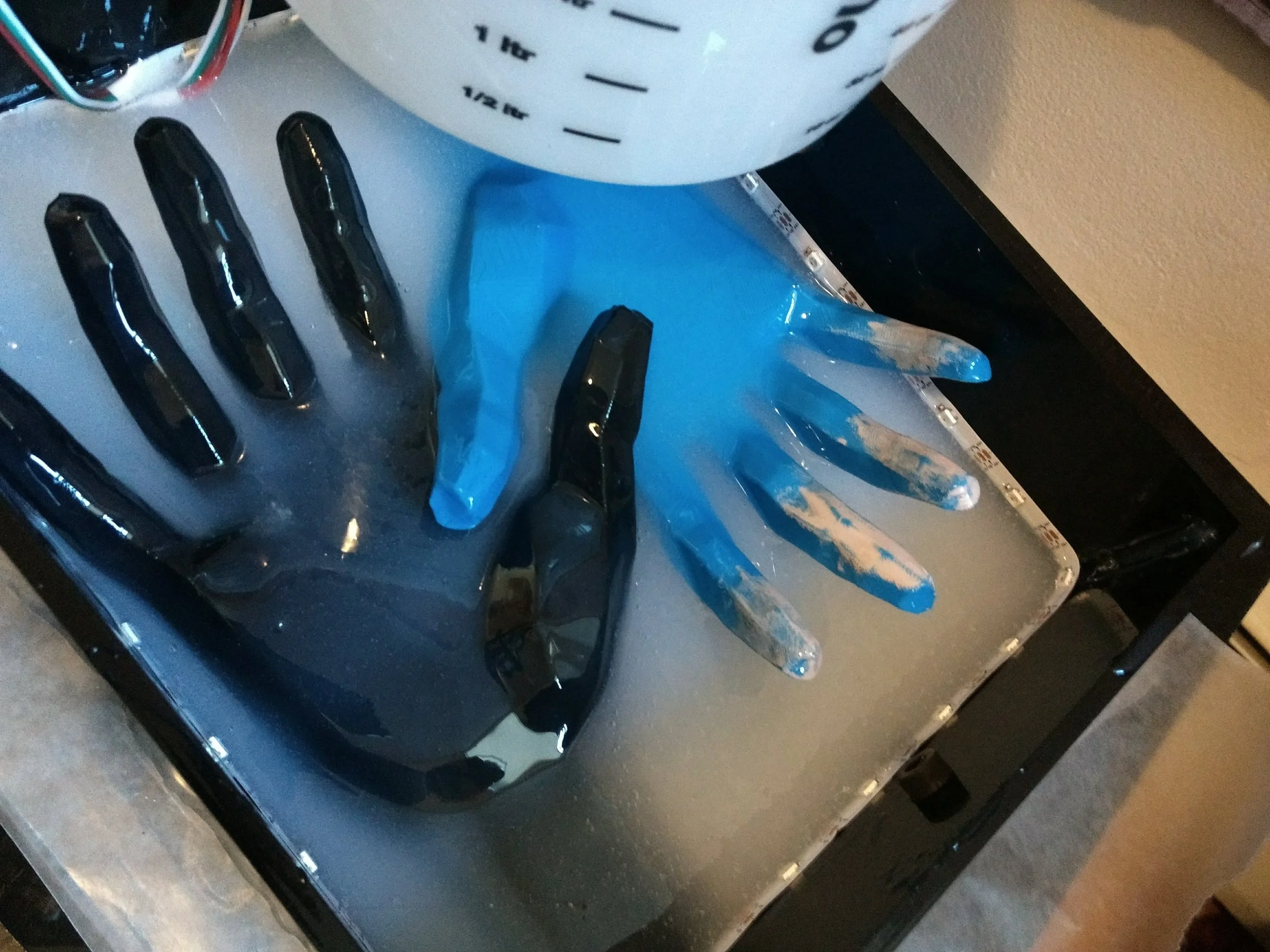
The interface where people would input sensory data to drive the piece (the pedestal)
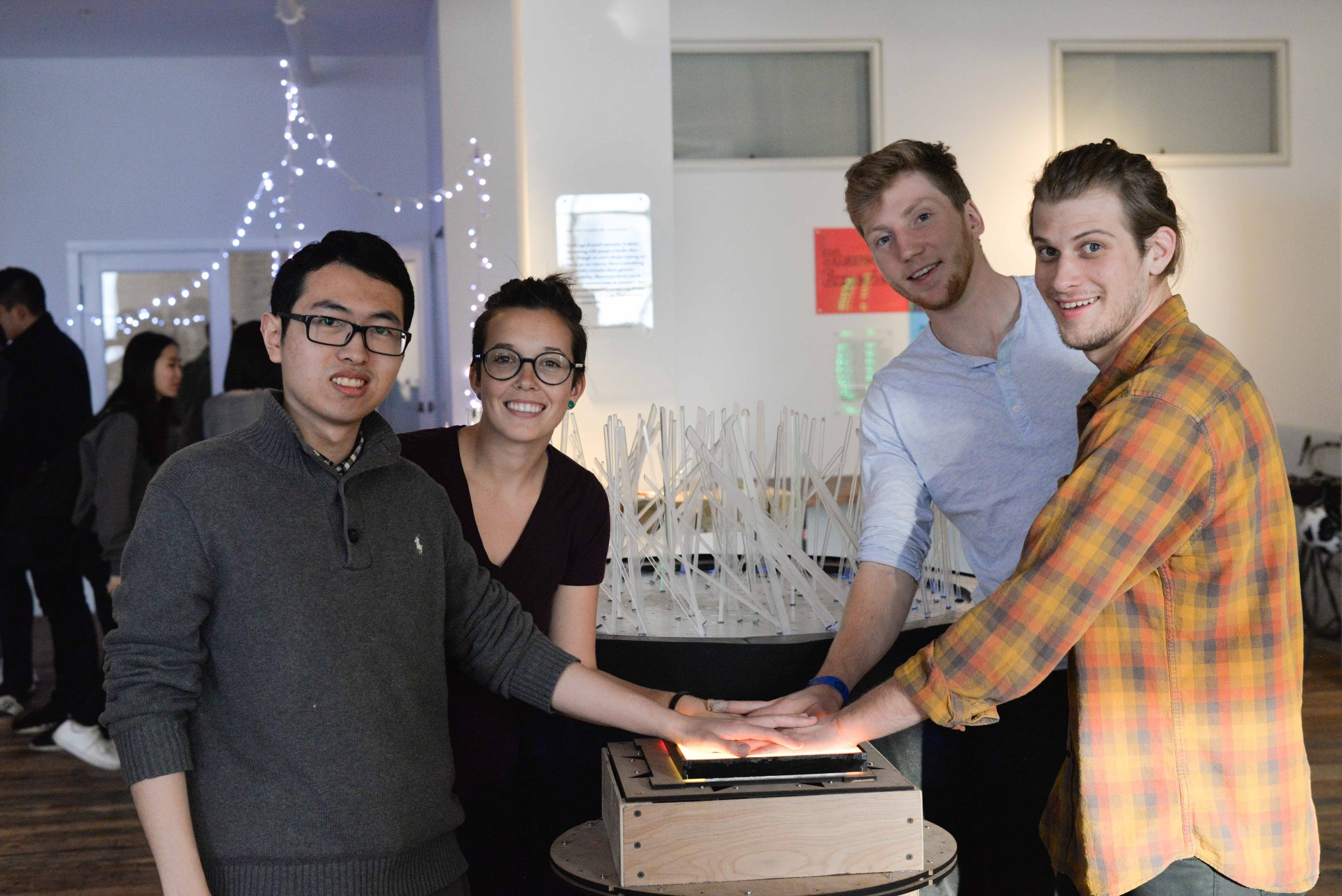
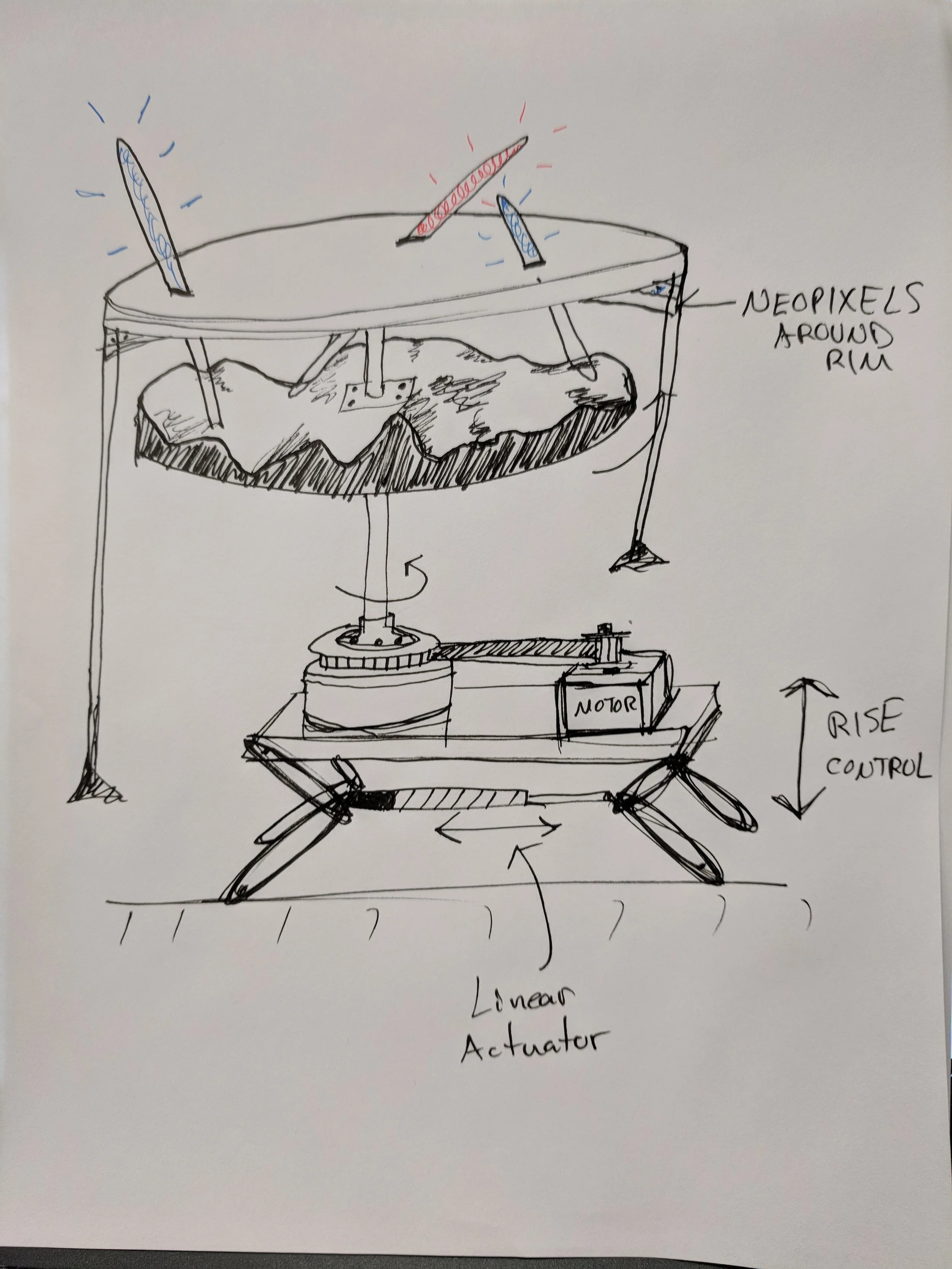
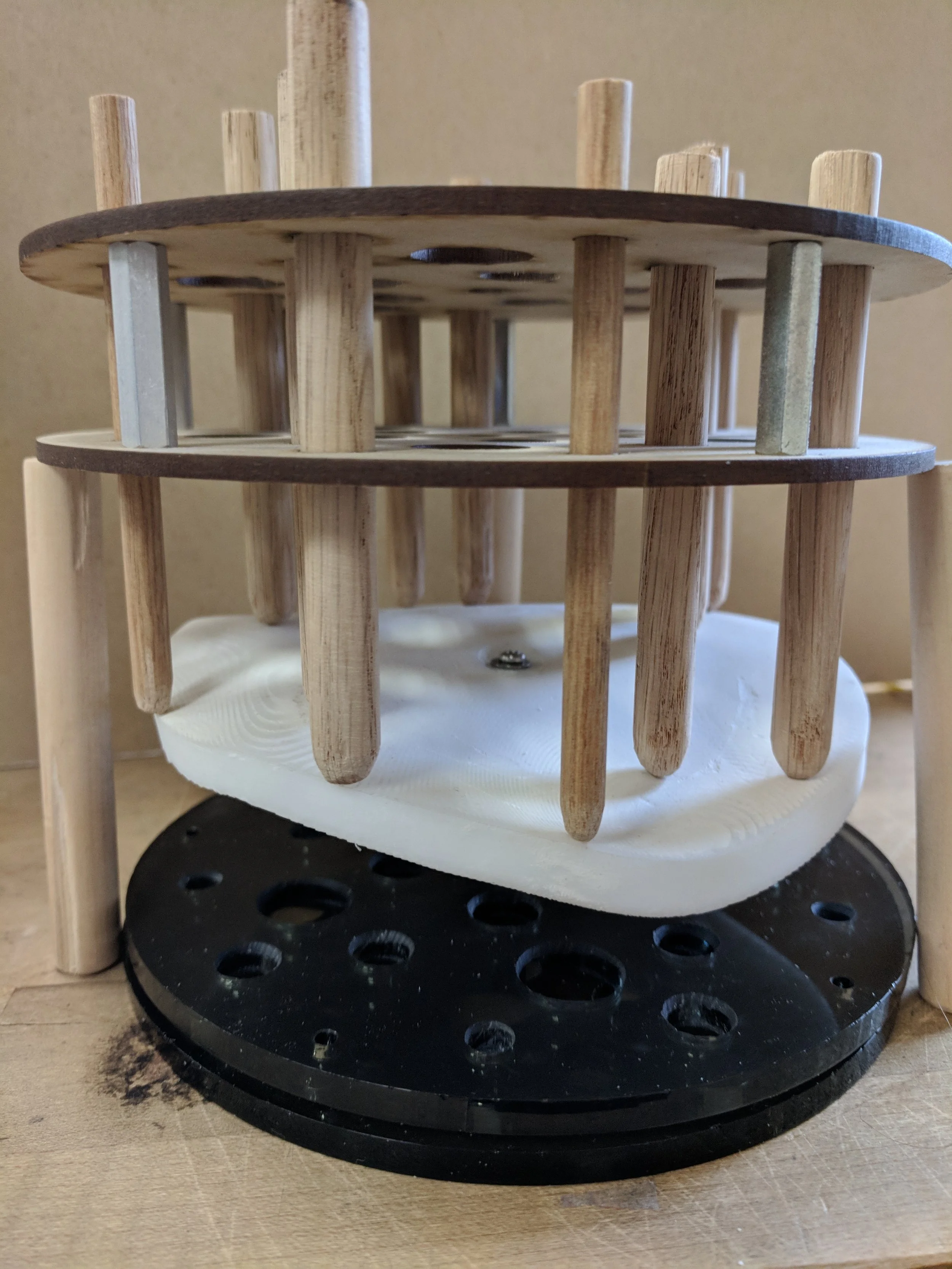
The reactionary physical display that would translate the input data (the base)
For the interface component, we wanted the input device to foster connection between two people instead of acting like an obstacle. This led us to create a bonding experience where hands would be the target. Holding hands is considered an intimate gesture not typically shared between strangers, but if we added an intermediary between the two that mimicked this action, people would be more inclined to participate. So we molded the shape of two hands into a soft skin-like silicone where people could insert their hands and feel physically connected without actually touching one another. Inside the silicone we molded a pair of heart beat sensors and phototransistors which collected data on the two individuals.
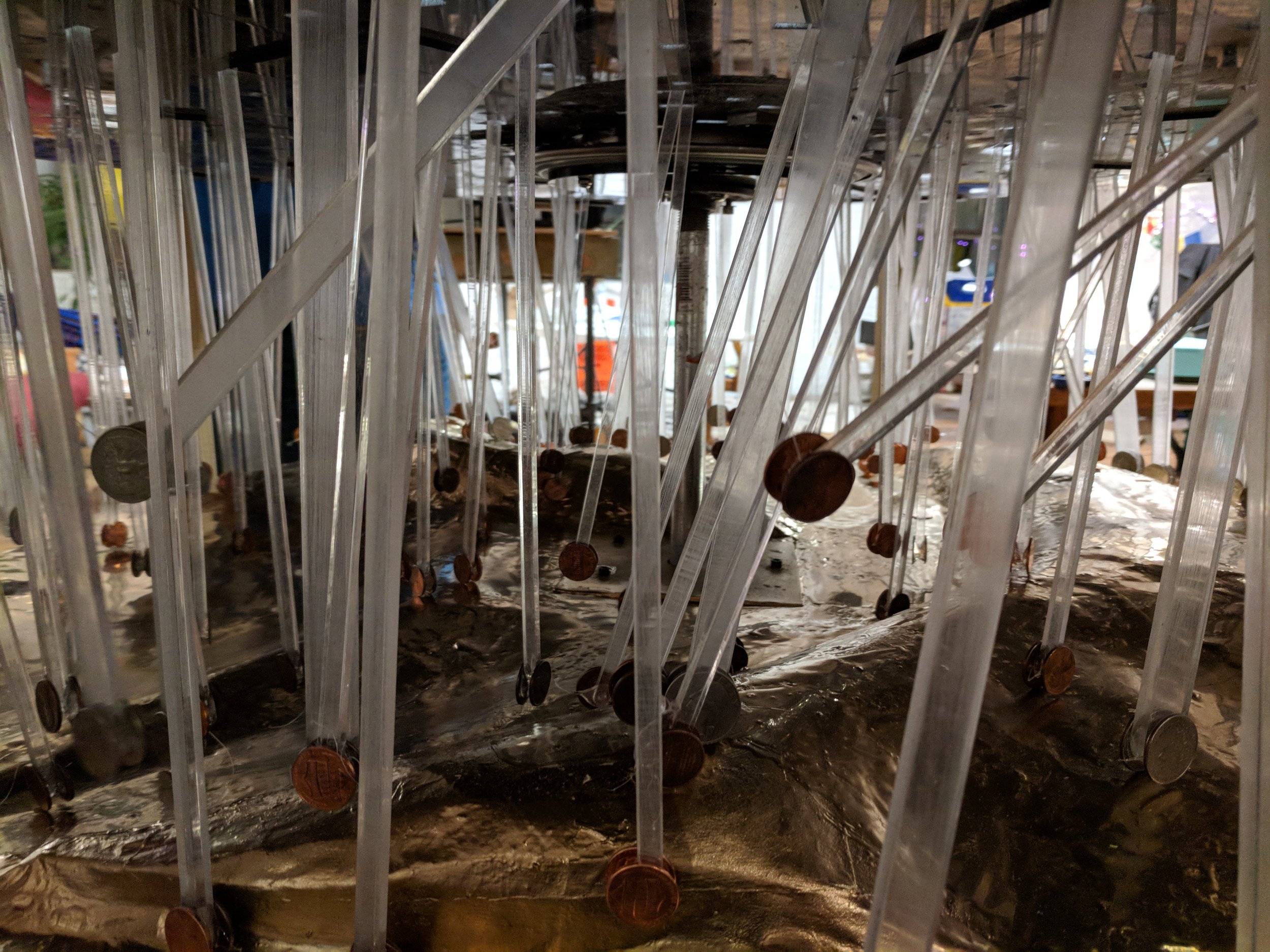
For the reactionary component, we wanted to express an organic response that made our piece feel less digital and robotic and more natural. So we chose to create a surface of acrylic tentacles that would bob back and forth to imitate long grass blowing in the wind. The sandblasted acrylic allowed light from underneath the surface to refract through the length of the tentacle giving a better effect.