Ombi
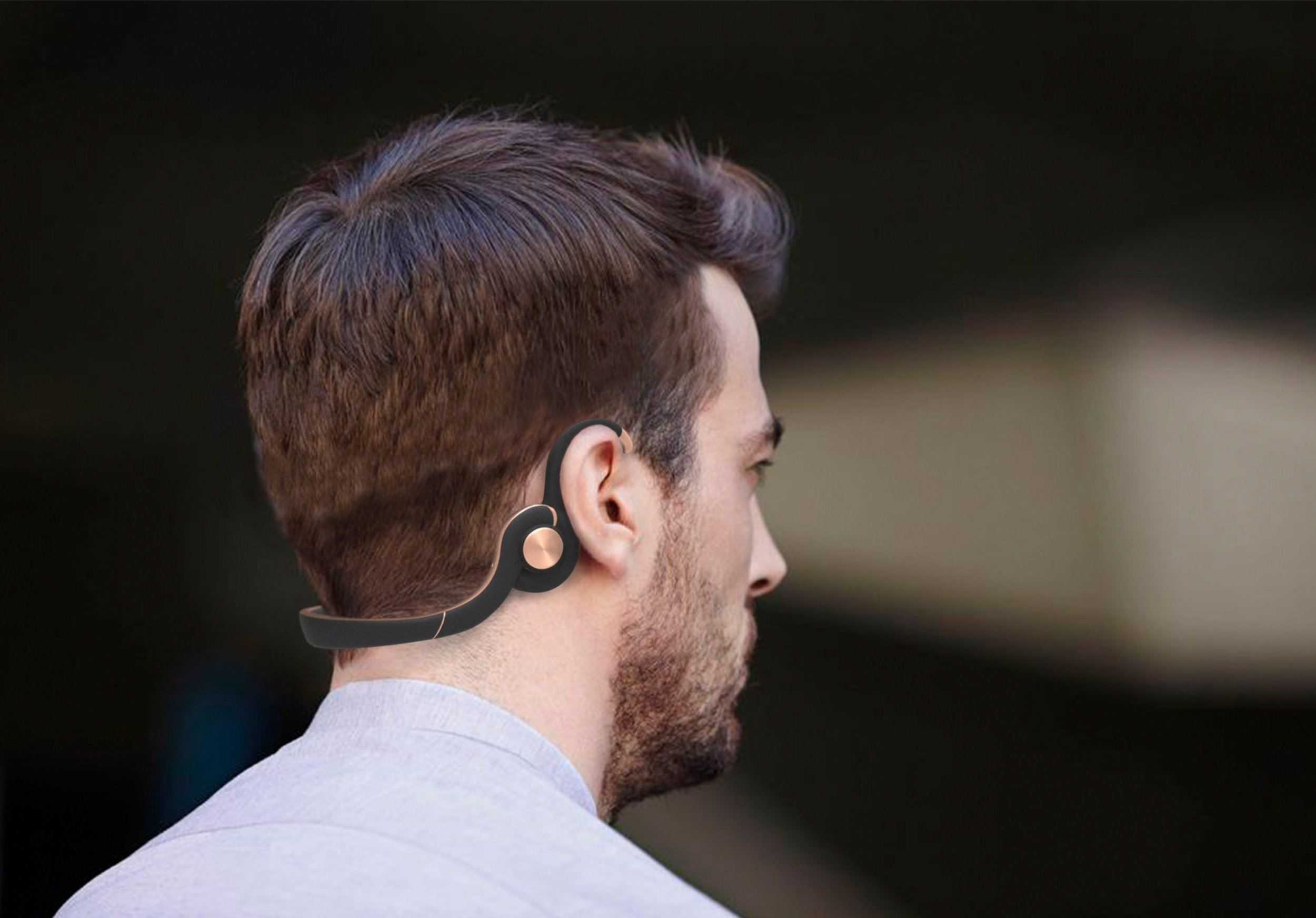
The noise-cancelling headphone designed for conversation, not stigma.
Role:
Project Leader
Responsibilities:
User research, storytelling, pitch deck creation, journey mapping, electrical engineering, prototyping, fabrication
Project Duration:
9 months
Final Deliverable:
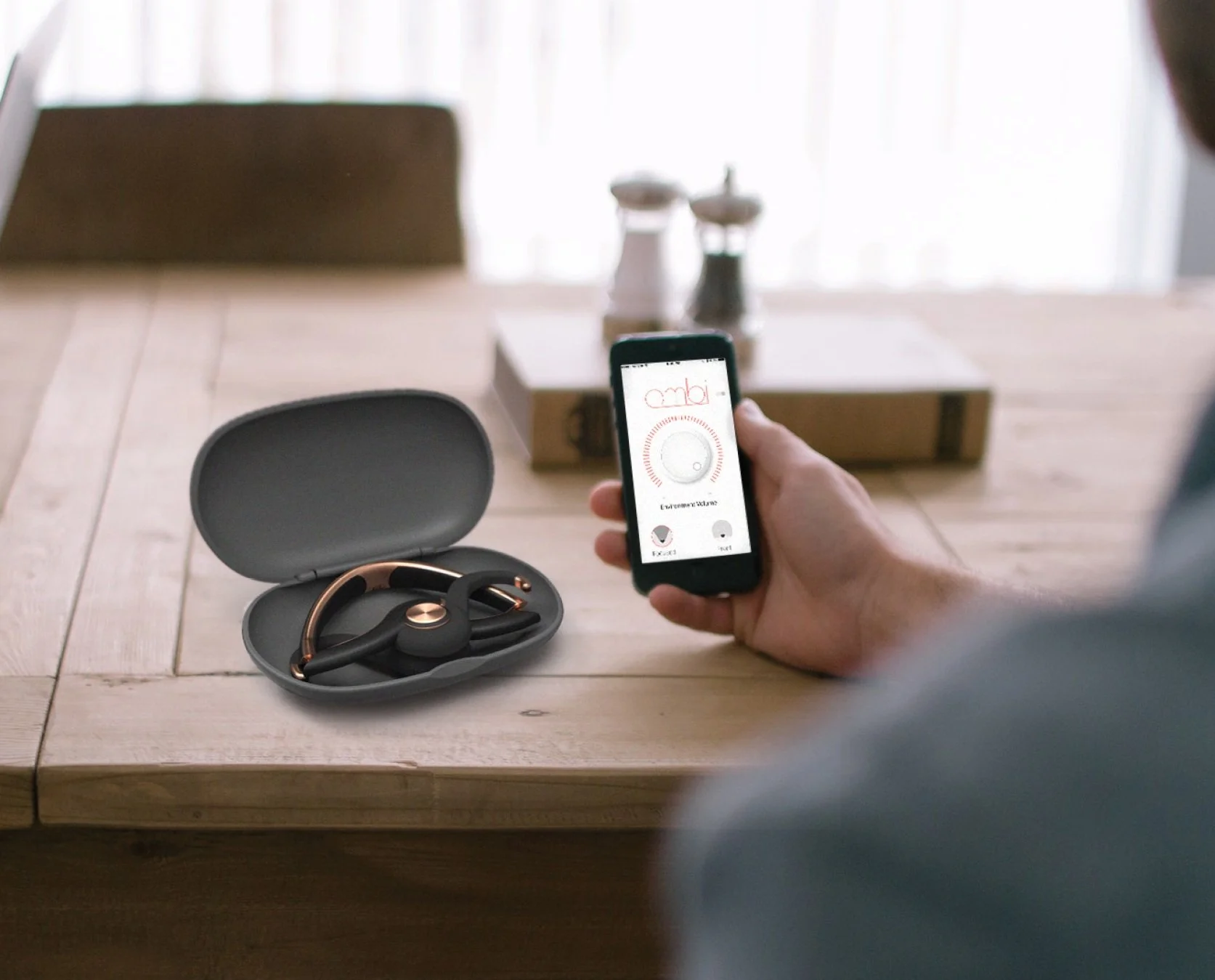
Ombi was developed to the prototype stage by myself, Sayla Tenenbaum, James Sannino, and Parker Barnett during graduate school at the University of Pennsylvania.


Objective
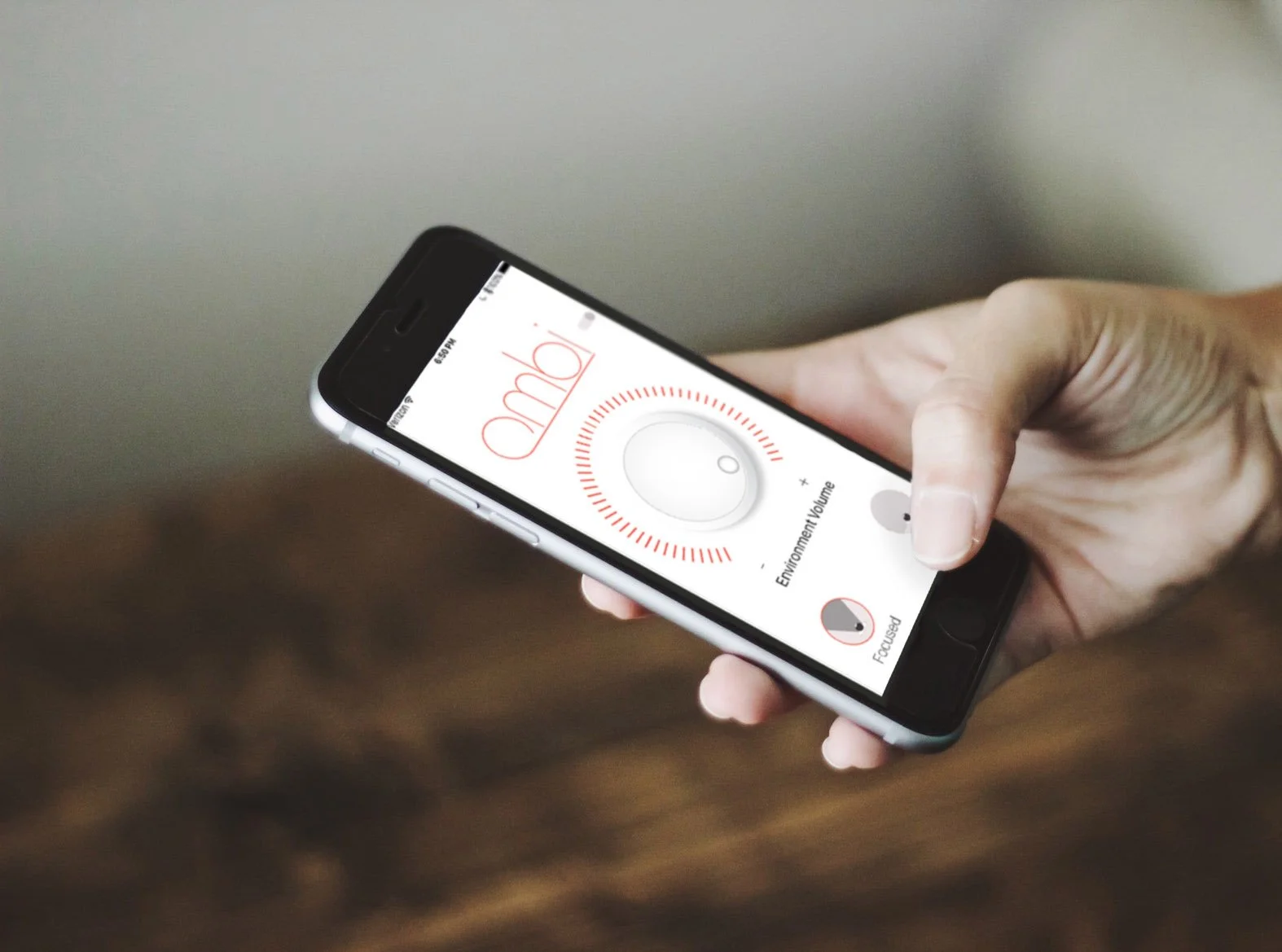
Ombi is the product created to assist those who have trouble engaging in conversation in loud environments. My thesis team had 9 months to analyze a domain in which to develop a product from concept to prototype and present a viable pitch to a VC panel.
To target our domain, we began thinking about assistive devices as they are today (hearing aids, amplifiers, etc.) and how we could evolve them into an aesthetically pleasing and desirable consumer product.
We decided to redesign a hearing experience that would beat stigmas, be more accessible, and ultimately grant new freedoms to anyone.
Research
You are probably familiar with the environment in the sound clip below:
If you’re like most people when it gets this loud, it’s incredibly hard to have a conversation without yelling, lip-reading, repeating yourself or leaning closer.
With this, we came to realize a simple issue that still remains ubiquitous and unsolved:
Conversations in loud environments are a struggle even with great hearing.
From restaurants to social events, people are always struggling to connect and communicate in environments that are meant to promote this very behavior. So our team came up with Ombi:
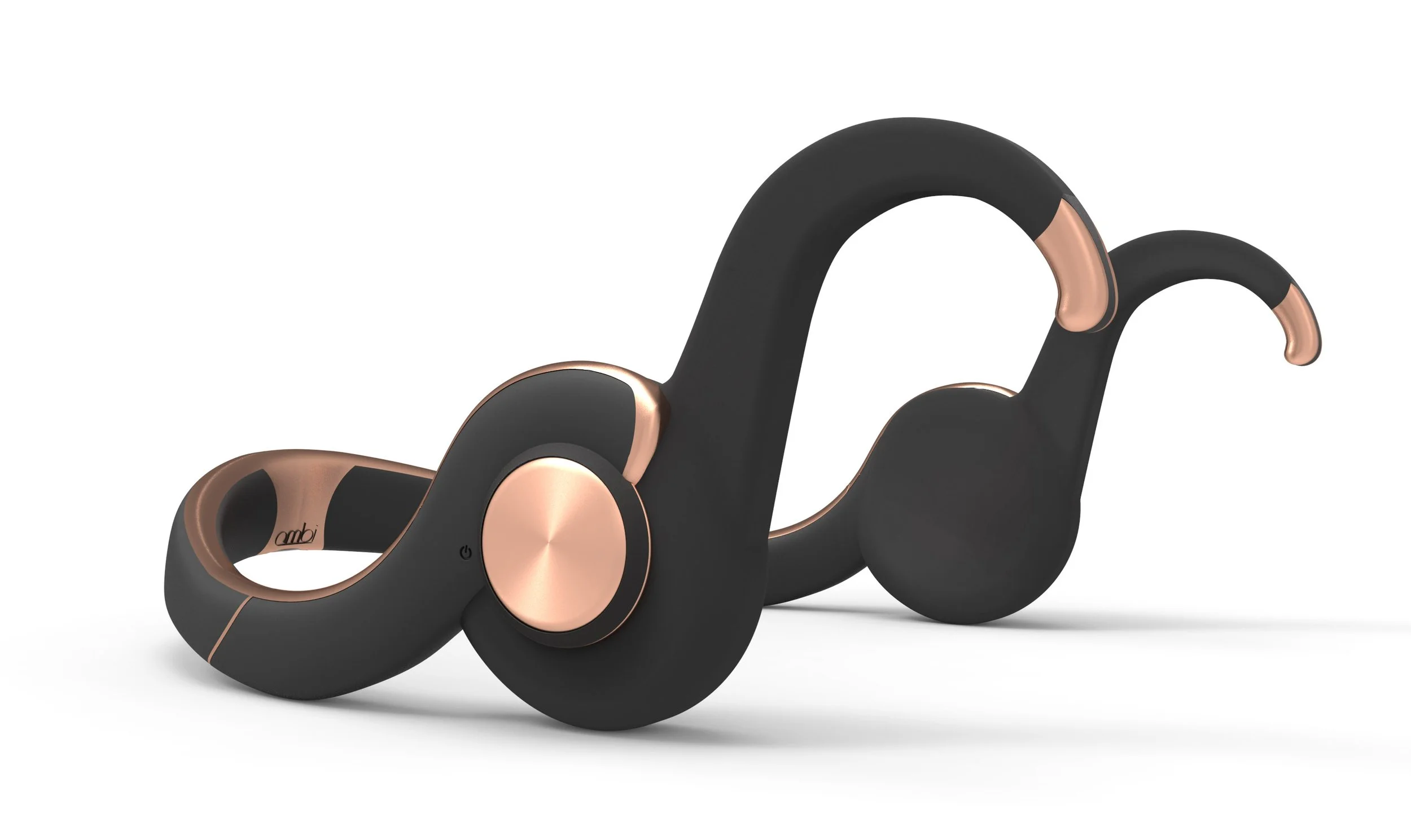
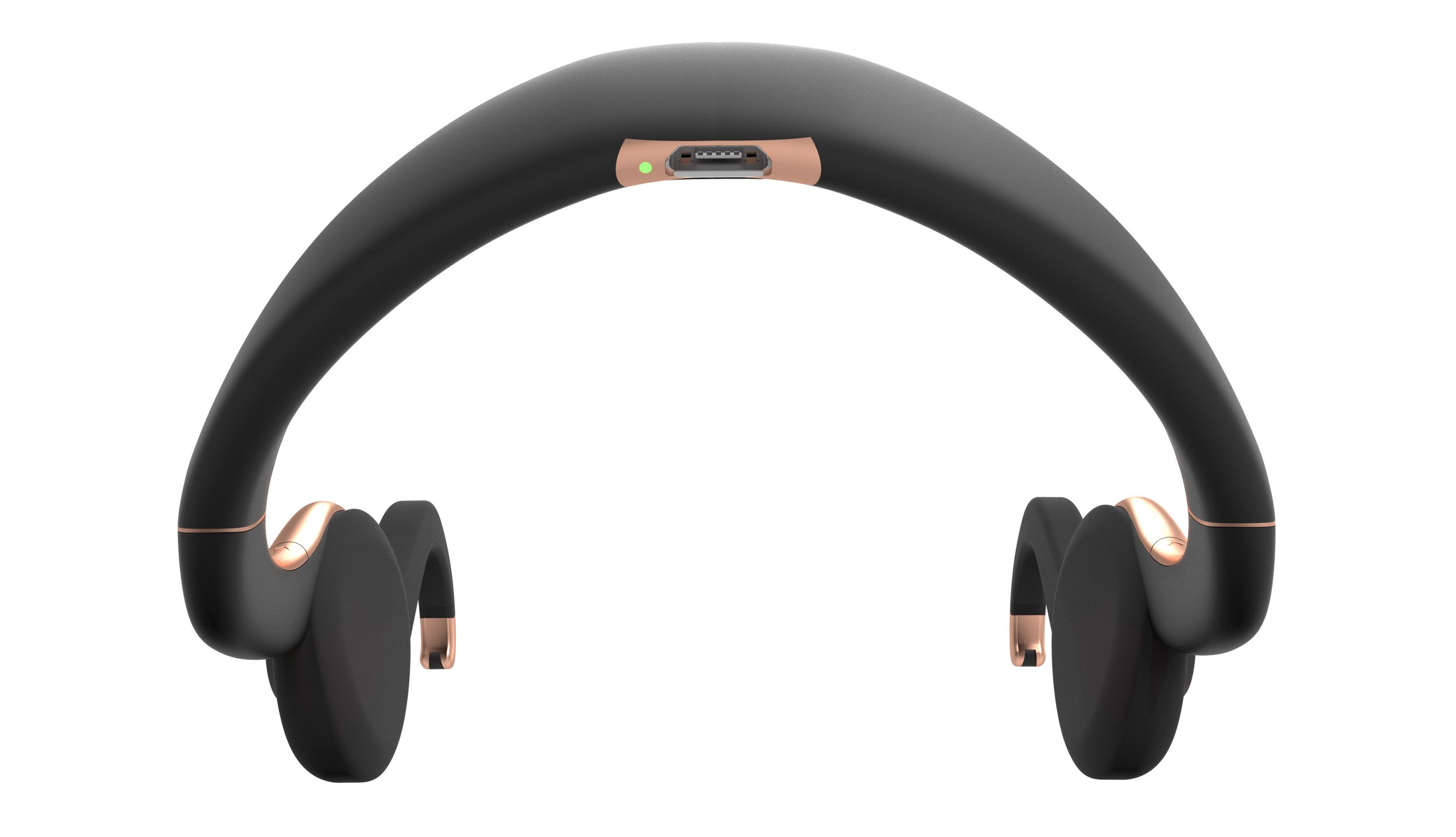
The first headphone to use active noise control and bone conduction to transform loud environments into conversation-friendly atmospheres.
Before we could begin designing Ombi, we had to better understand how sound volumes and frequencies affect conversation in different spaces.
The decibel or dB is the unit used to measure the intensity of a sound or simply, the volume.
Conversation at a normal volume takes place at around 60 dB, but the volume in your average restaurant typically floats in between 80-95 dB, with subways and concerts reaching levels well over 100 dB.
Environments with high decibel levels, while annoying and difficult for people with normal hearing, can be debilitating for those struggling with any level of hearing impairment.
48 million American adults have a noticeable level of hearing impairment
and
29 million American adults could benefit from using a hearing aid, but don’t use them
For the hard of hearing, situations like these are isolating and conversations with family and friends can be unintelligible.
Places with lots of environmental noise affect more than just our experiences at restaurants. Our experience during busy commutes and our ability to concentrate in today’s common workplaces, such as Starbucks or WeWork, can all suffer.
If we could solve the issues for the hard of hearing, we could simultaneously transform audio experiences for anyone, anywhere.

Insights and Design Criteria
After interviewing many individuals with varying levels of hearing ability (from completely deaf to the slightest of hearing loss), we gained an incredible amount of insight into the situational and emotional struggles they face on a daily basis. We heard things like:
“I can’t go to most restaurants in the city because I’m not able to hear what my friends are saying while we are there.”
And when asked whether they have tried an assistive hearing device they said:
“I used a hearing aid once, but all it did was amplify everything, I couldn’t distinguish noise from conversation.”
“Hearing aids are so hideous and people wouldn’t look at me the same way if I wore one.”
These struggles and stigmas guided our design criteria for the development of Ombi.
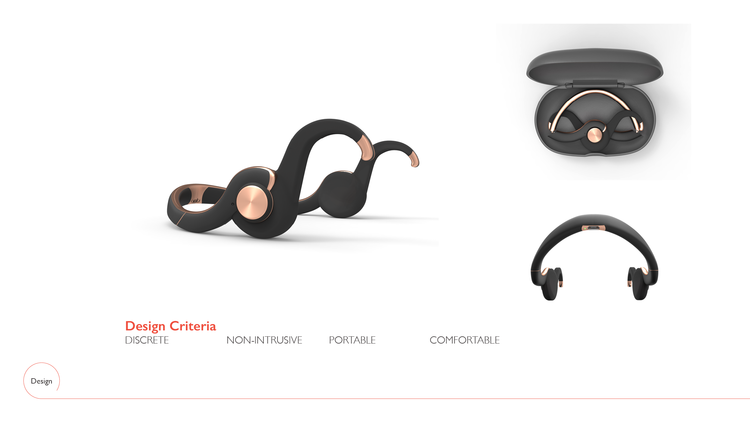
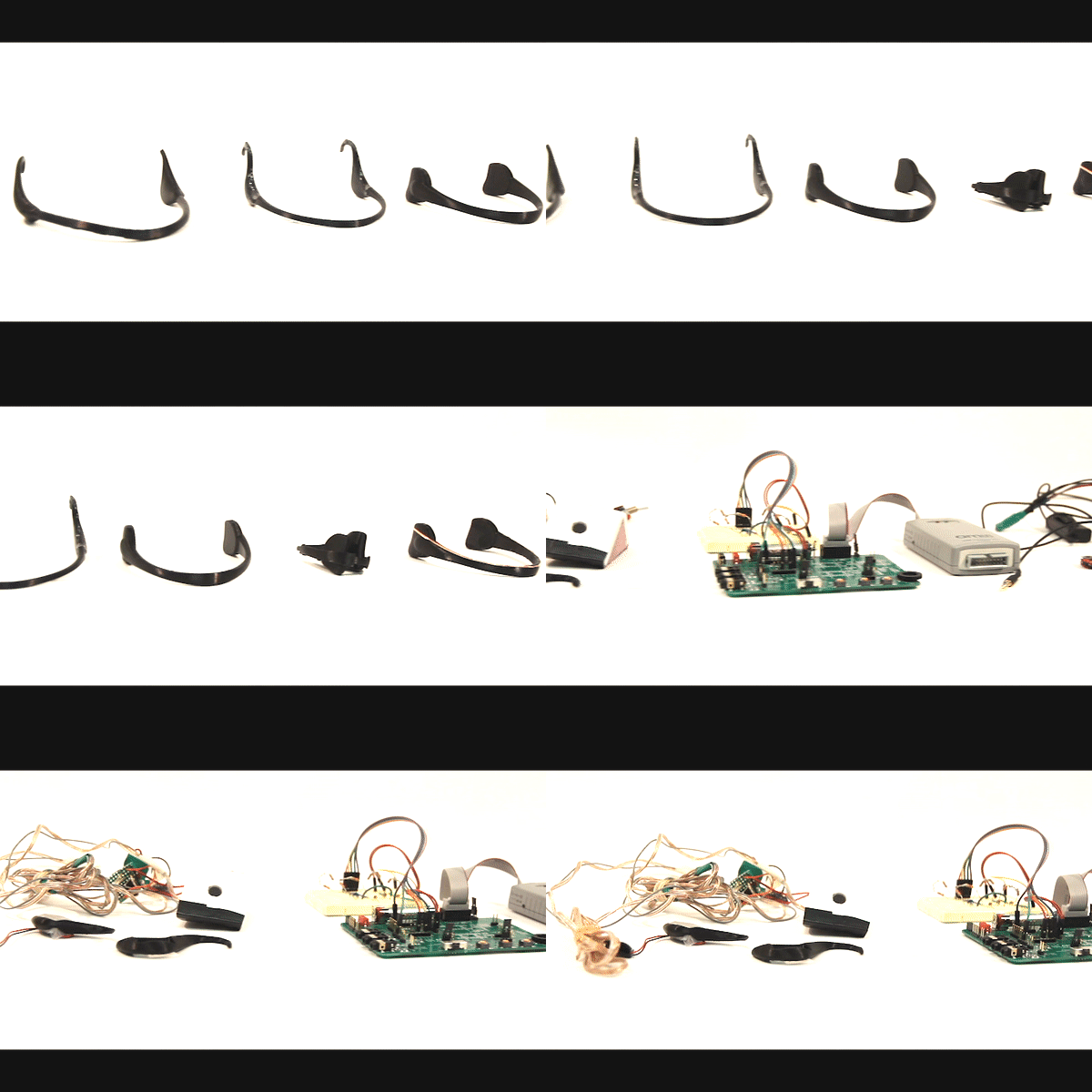
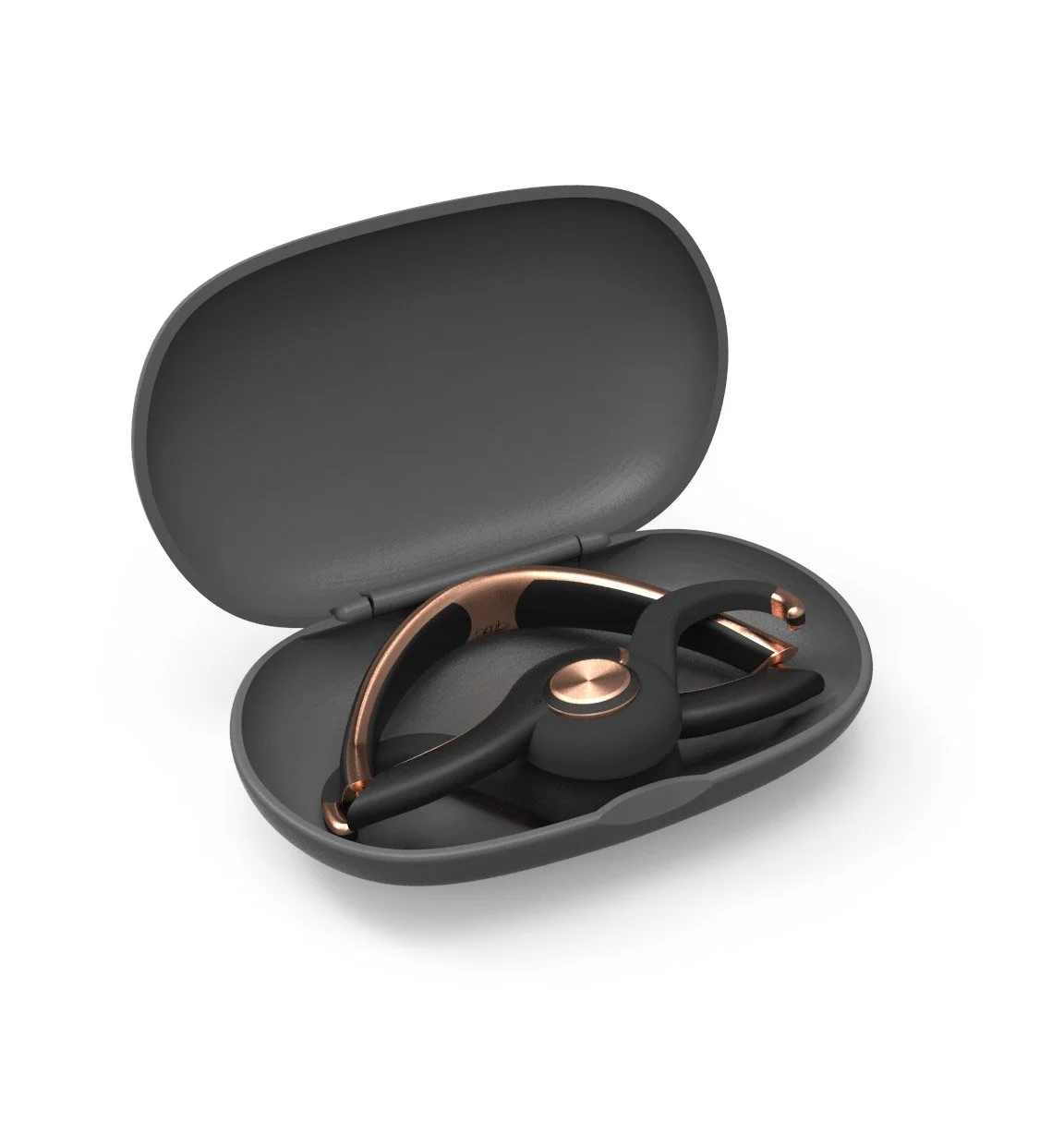
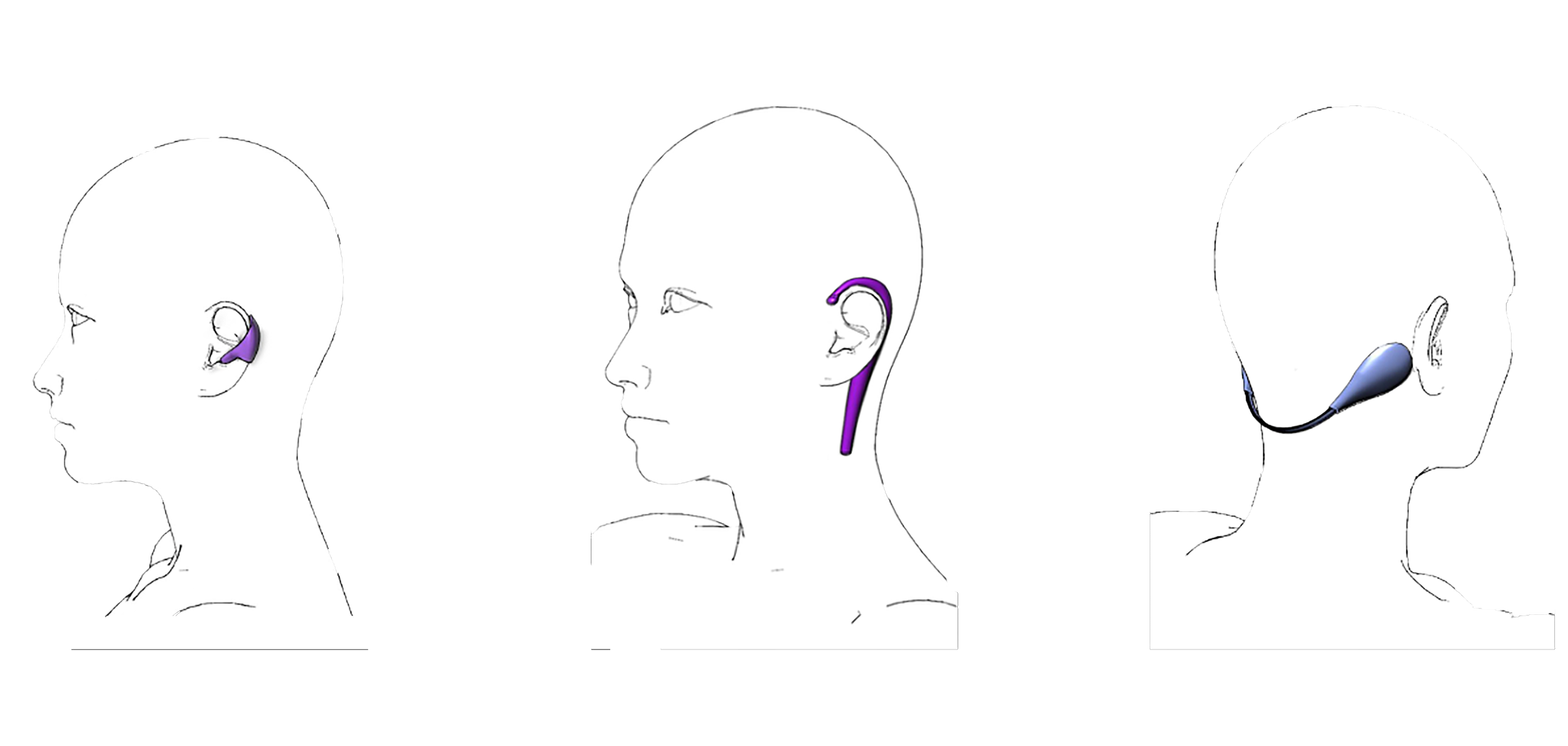
Using these as boundaries for our design, we began the hunt of exploring different materials, wrap-around configurations, colors, styles, visibility, folding mechanics, and how it might interact with other head and ear accessories like hats, glasses or earrings.
Technology
Our core technology was centered around bone conduction and active noise control.
Why choose bone conduction instead of speakers?
First, bone conduction works by conducting sound waves directly through the surface of your skull where they vibrate through the bone and are picked up and translated in the inner ear. This is compared to normal hearing where sound waves pass through the air and the eardrum picks up those vibrations to send to the inner ear.
The primary benefit is that it’s not in your ear so you can still hear what is going on around you while listening through bone conduction.