Jellyfish Forest
Role:
Director, designer, engineer
Responsibilities:
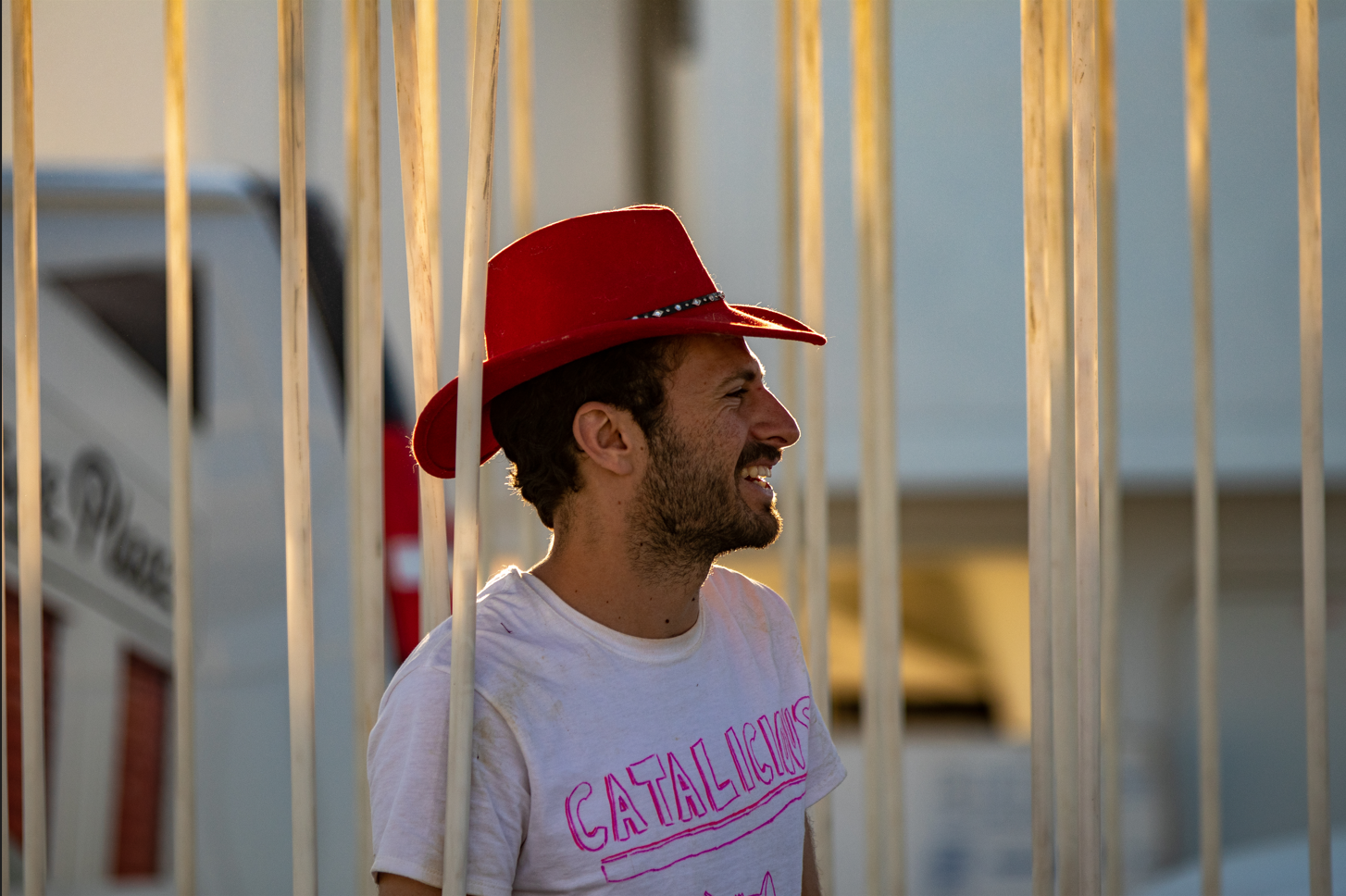
I designed and engineered this project in conjunction with Julian Mickelson.
Project Duration:
5 months
Launched:
August 2022
Merging organic interaction with digital immersion.
The Jellyfish Journey
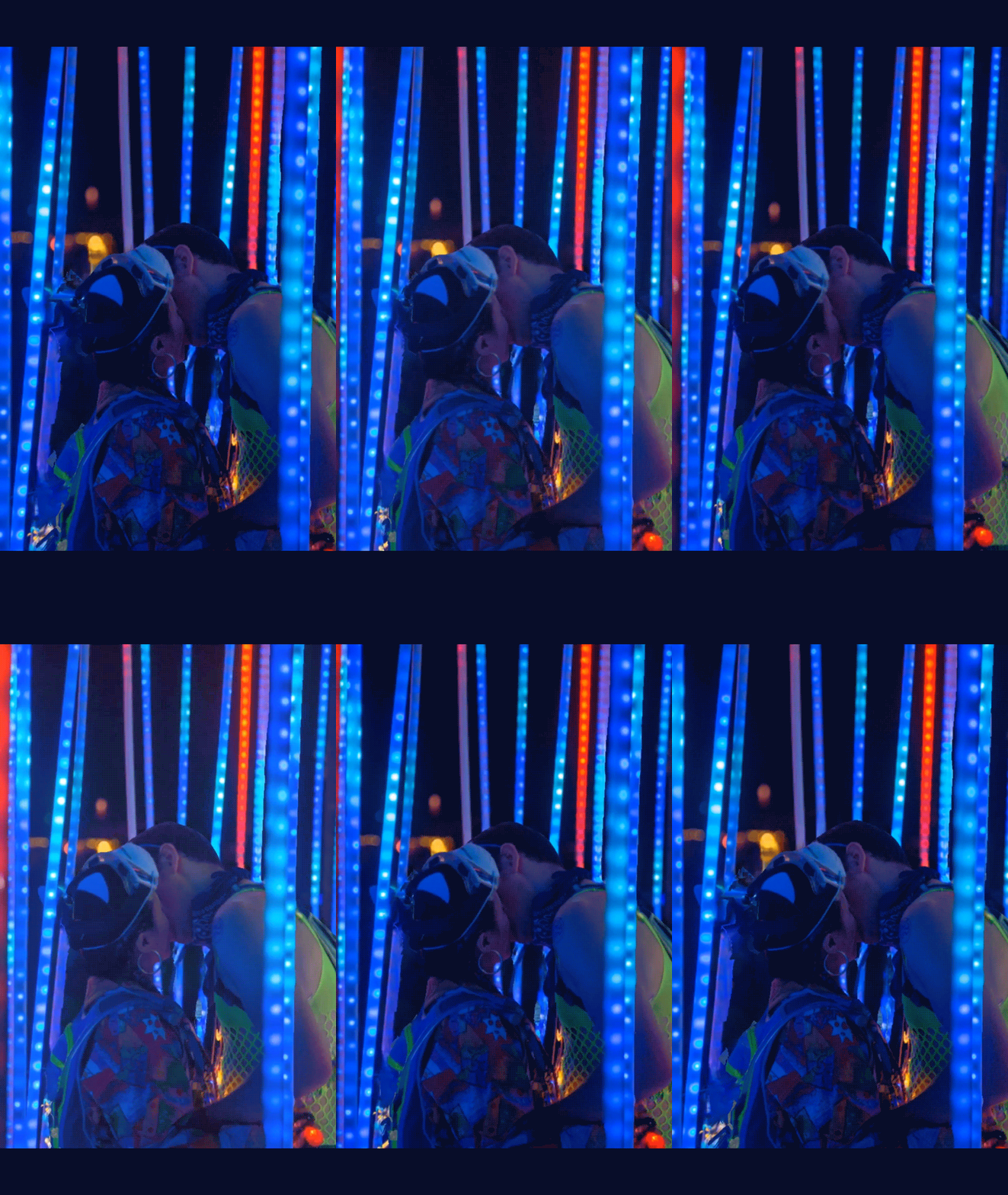
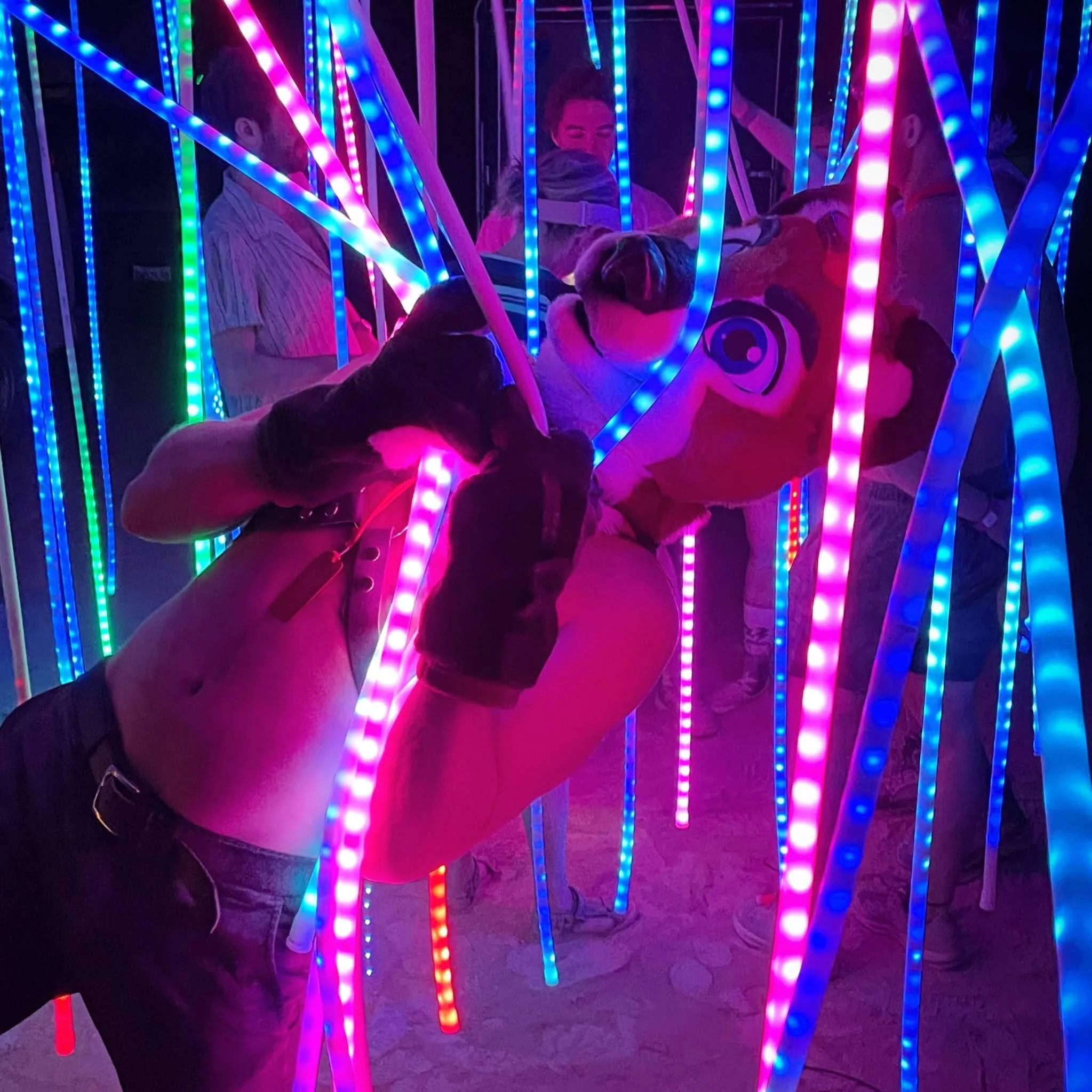
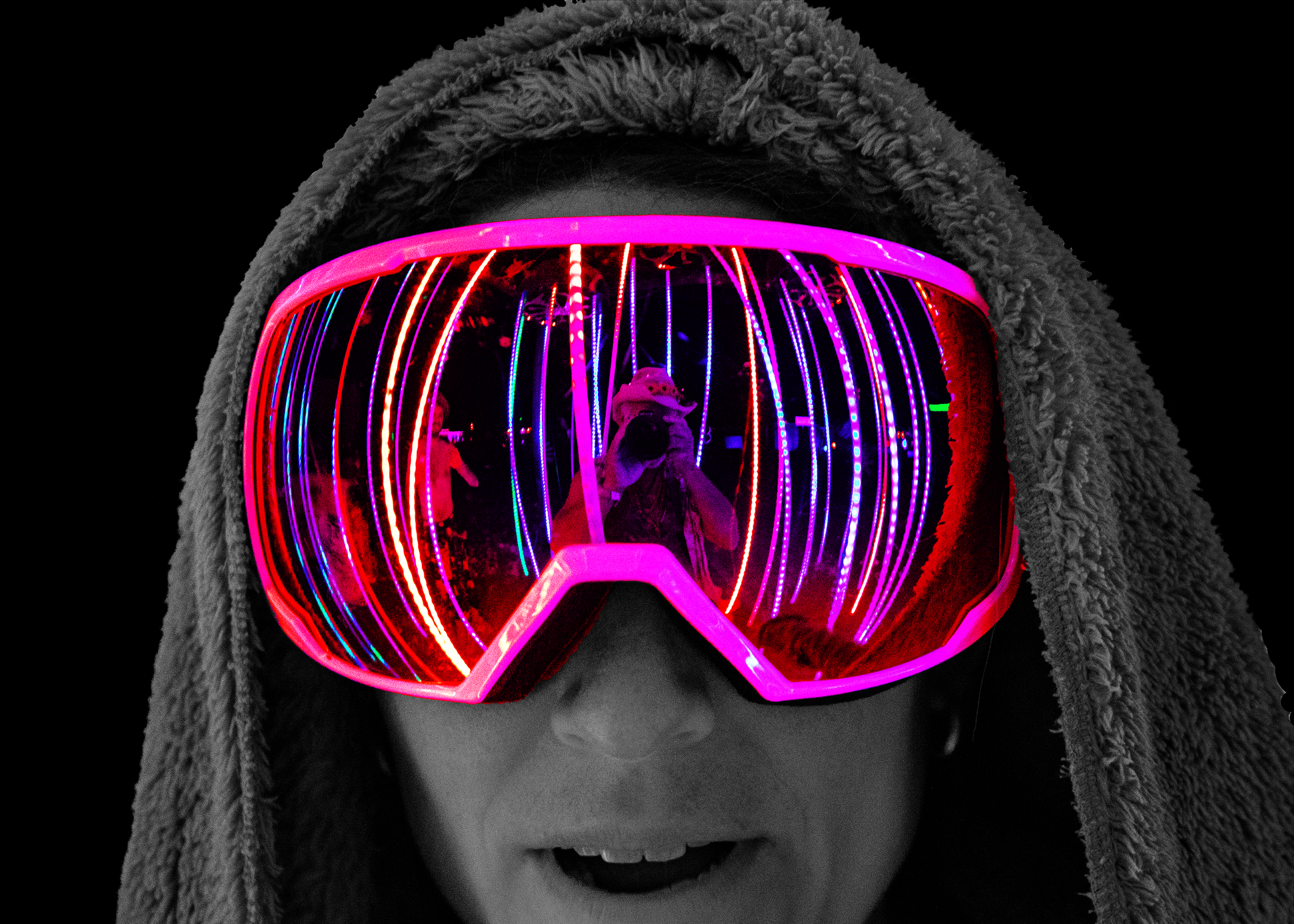
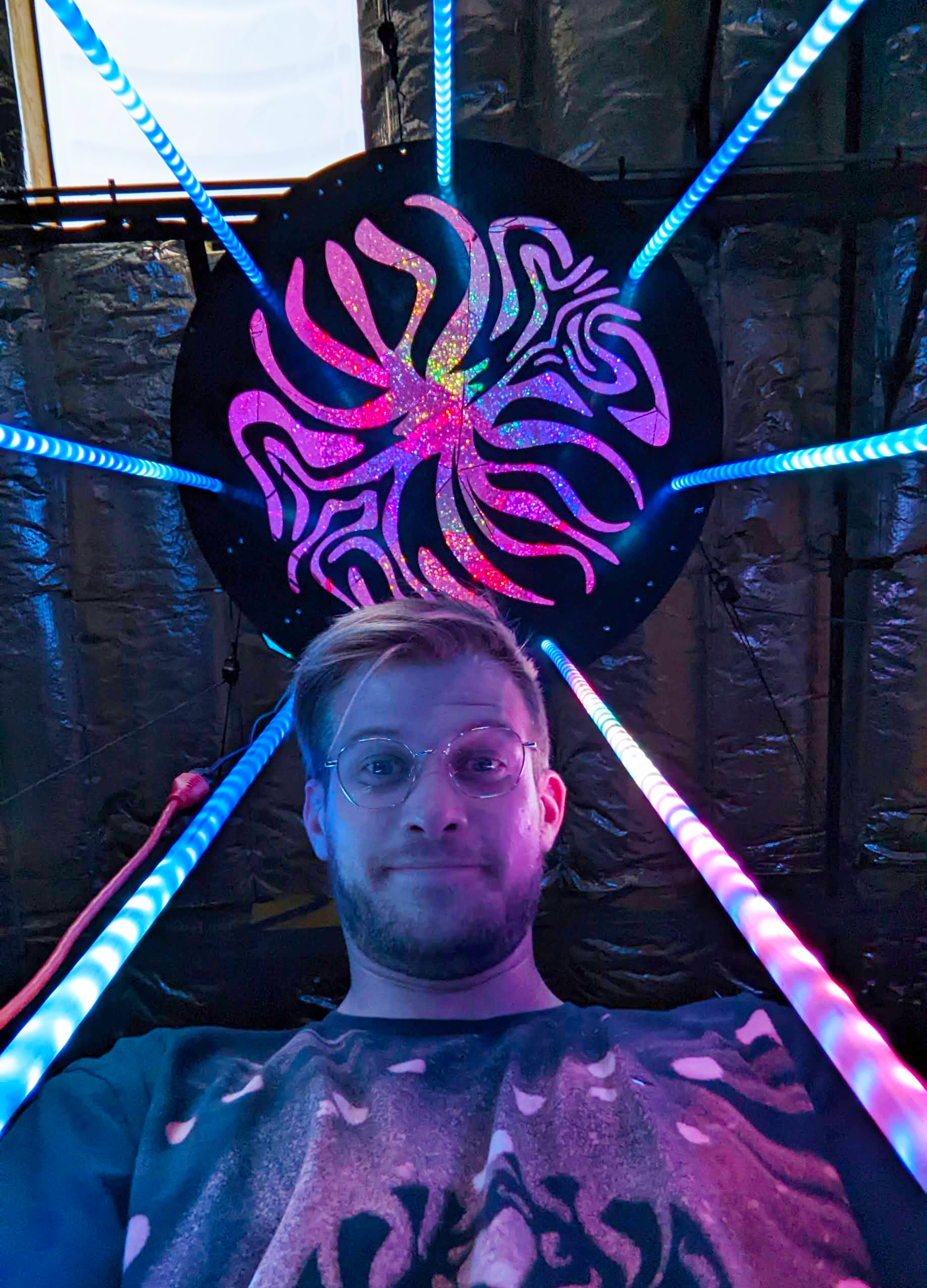
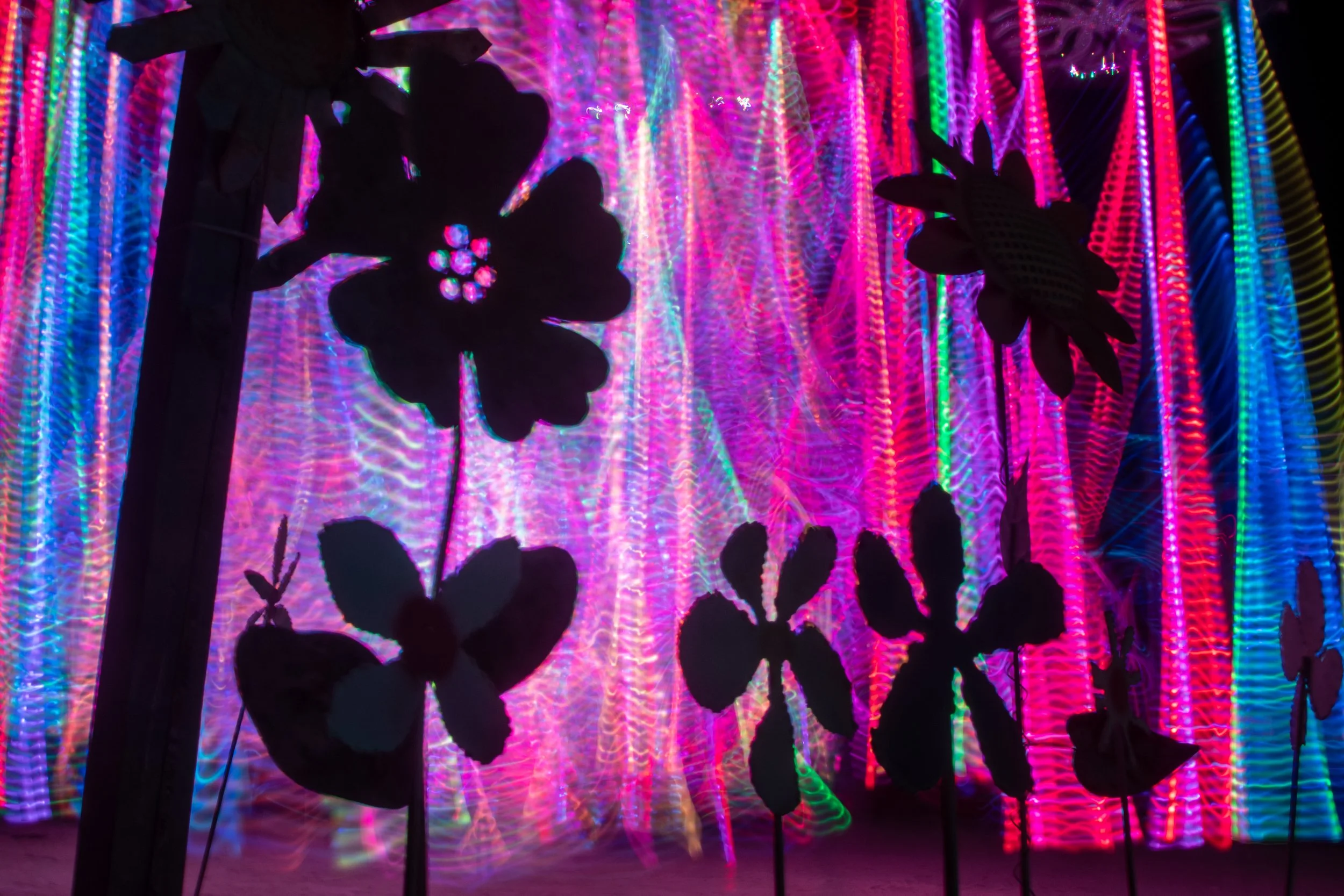
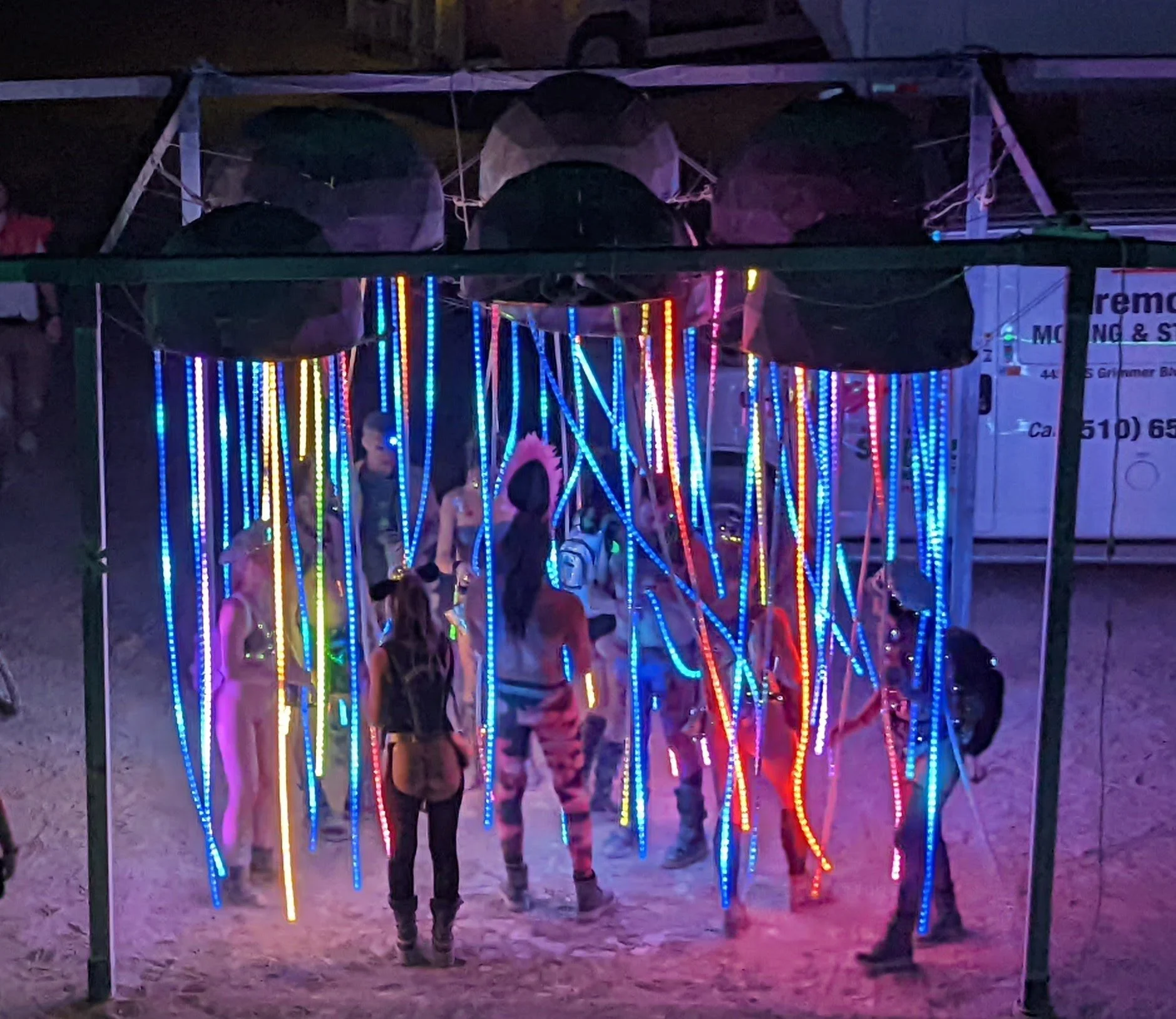
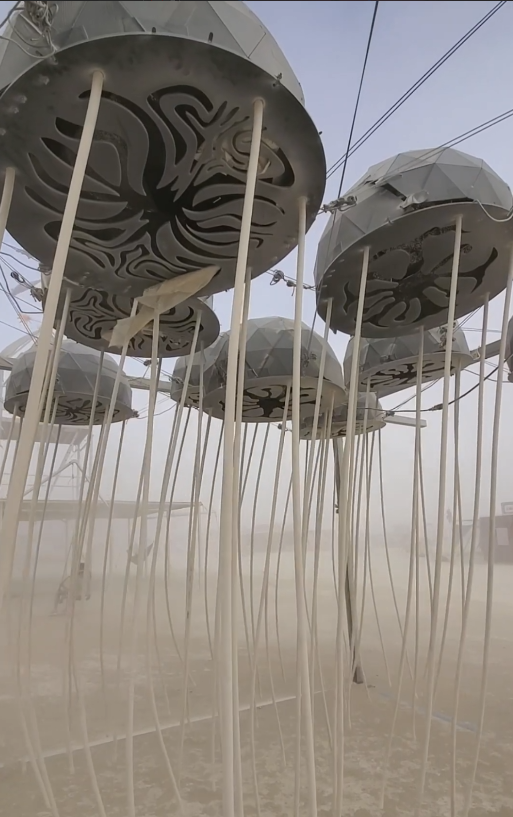
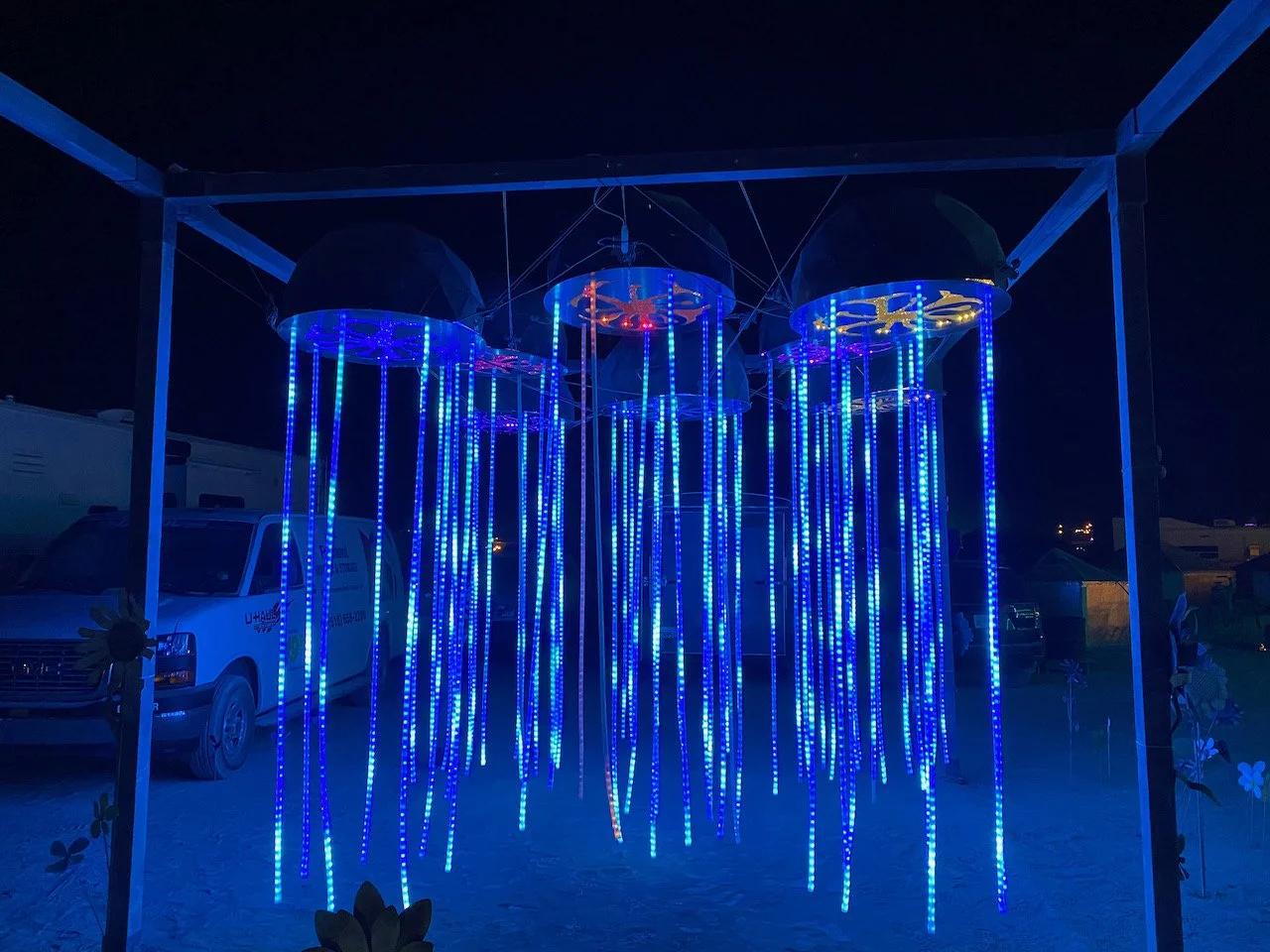
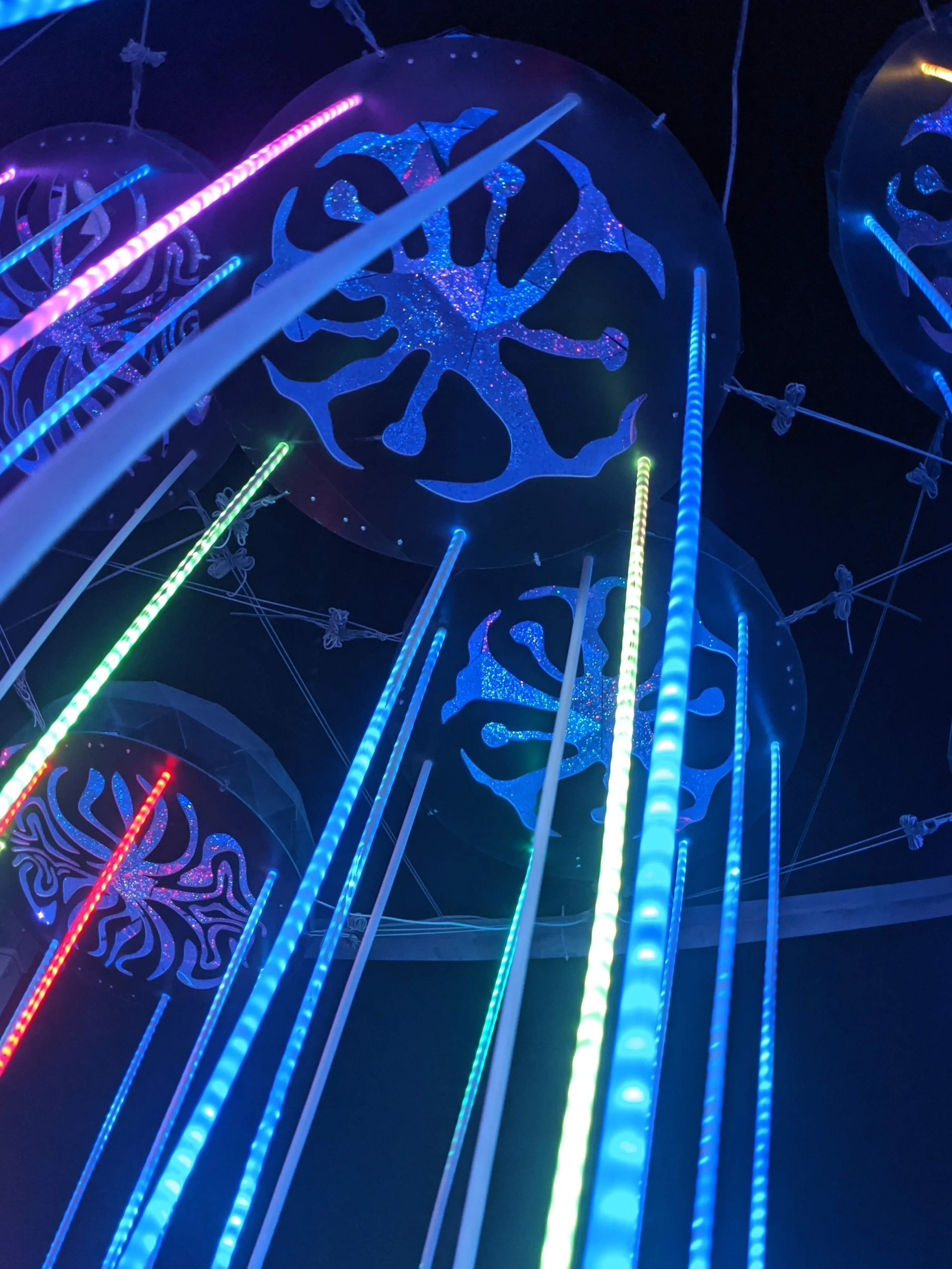
For the Jellyfish Forest installation, we created a volumetric light sculpture featuring 105 touch-responsive tentacles across 15 fractal jellyfish bodies. We used 16,875 LEDs to completely immerse our audience in a living ocean of color and light. This build was featured in Black Rock City’s 2022 Burning Man event.
The jellyfish is one of earth's few species who experience immortality. This drifting, living record has much to teach us about our finite human journey in an infinite world. Burning Man is about driving deep connections to our planet and to our inner and outer worlds. The jellyfish forest takes you into those depths and asks you to reflect in its psychedelic waters with the goal of filling our brief lives with wonder and intention. How can we, too, experience forever?.
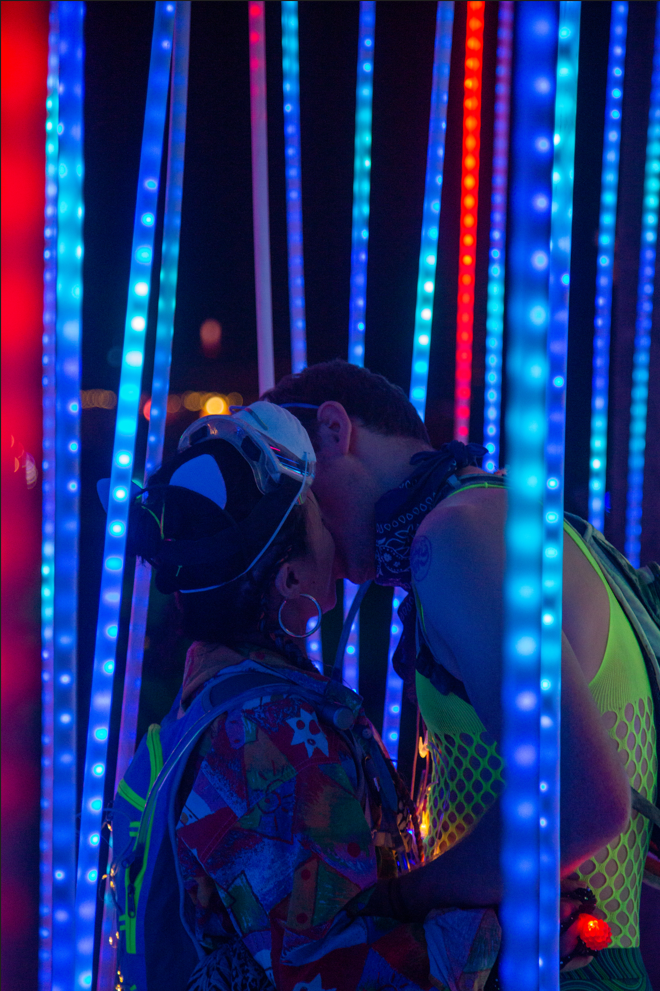
My goal was to create an immersive environment where participants can feel a living connection with these organisms. As participants walked through the labyrinth, they would receive an organic and colorful reaction with each touch of a tentacle.
The results were electrifying with eyes lighting up in awe and amazement at the real-time interactions and animations of the tentacles and jellyfish bodies.
The Interaction
We wanted to immerse people in an environment that felt organic and natural. We wanted to create a dialogue between human and technology that was more intimate and reflective of communication among humans and nature.
When most people think of communication with technology, they think transactional
input information or call to request >> outputs information or action, through use of buttons or screens
Design Criteria
1) Tentacles had to feel and behave naturally.
2) Great light diffusion.
3) Each tentacle had to respond independently to touch.
4) The response had to mimic an organic reaction.
5) Light response had to be in the correct location.
6) The unit as a whole also needed to respond to interaction.
The Technology
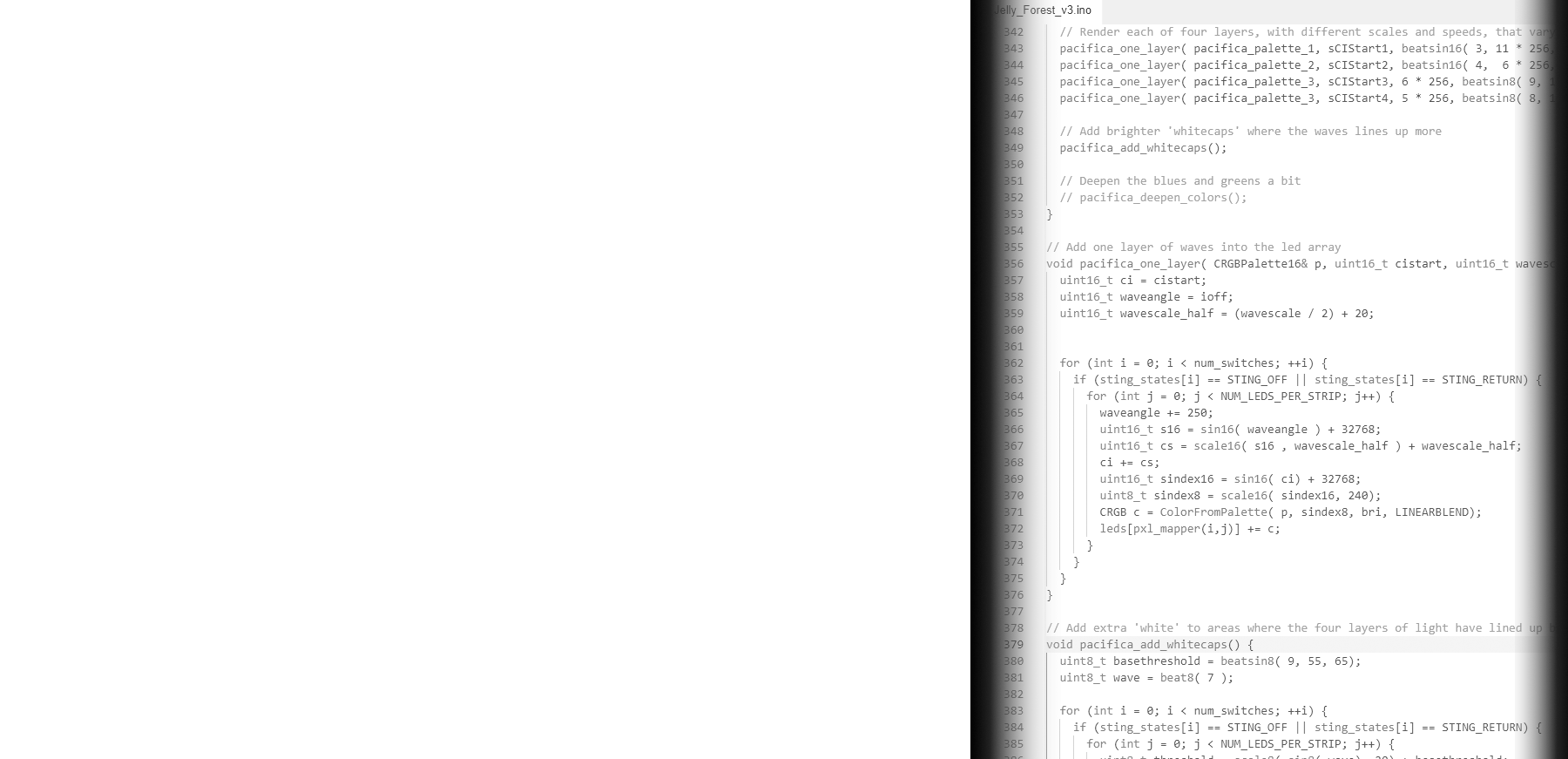
We used a very simple vibration sensor with smart programming to mimic a complex response to our audience. Not only did each tentacle responded independently when it was touched or moved, but the unit as a whole had a nervous system response where the body of the jelly also displayed an animated reaction with each touch. Each jelly unit operated entirely independently from other units. We programmed the jellies using a Teensy 4.0 MCU and an Octo WS2811 LED driver to handle the independent control of the tentacles and perform with an extremely low latency. The body was comprised of a aluminum composite base for its lightweight strength and the dome was fluted polypropylene designed to be rigid in its final folded form.
Challenges
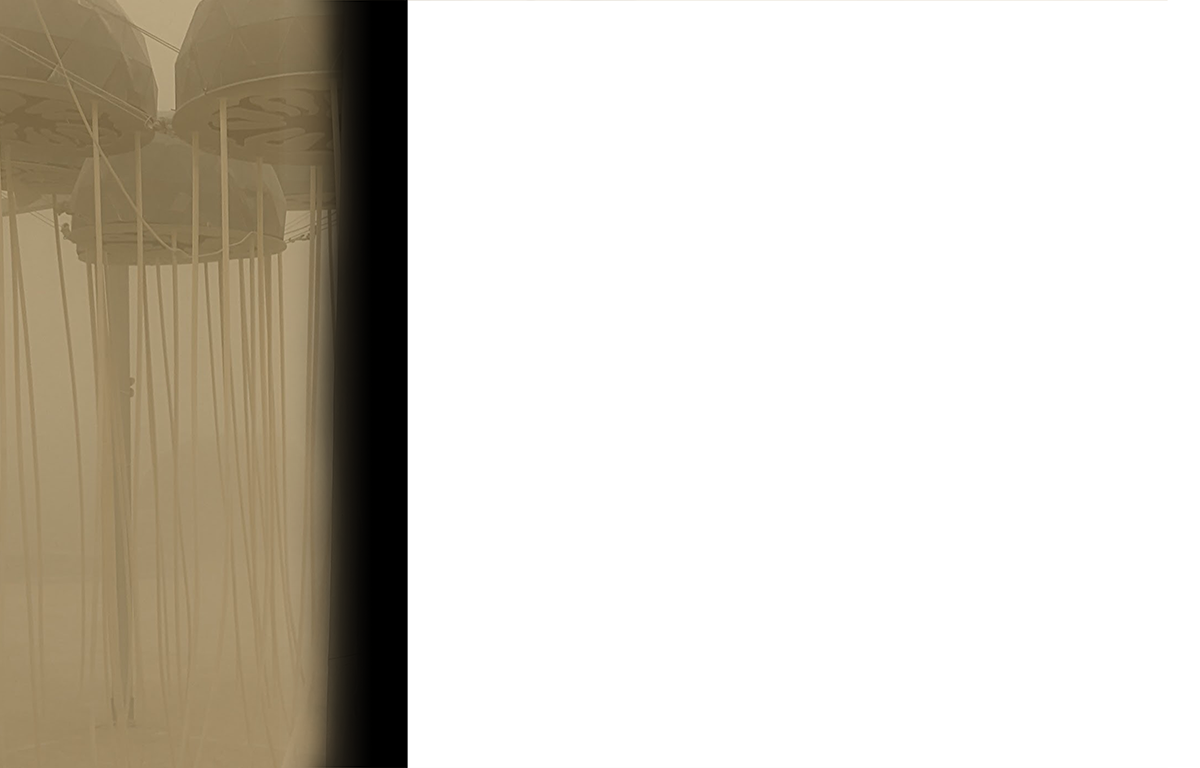
Designing for the Black Rock Desert is tricky. It is one of the harshest and most corrosive environments in the world, the clay silt has a very high alkalinity that can truly terrorize any materials even after just a week.
1. Dust storms up to 70 mph. We developed a hanging harness system for this that allowed movement and flexibility.
2. Silt particle size can be as small as 1 micron. We sealed our tentacles to protect the LED strips which we had seen corrode in the past.
3. Human factor, potential of up to 80,000 people interacting with the installation 24/7. Kept the bodies suspended at 10 feet to be out of reach.
6. Strain relief for tentacle interaction, i.e., yanking, batting, pulling, grabbing. Internal strips were able to slide freely inside of the silicone tubing.
4. Heat and solar radiation. Ambient air temperature wasn’t too much of a problem due to the wind for self-cooling, however radiation surface temps could reach up to 160F.
5. Touch interactivity took us a while to solve (accelerometers, flex sensors, encoders, motion sensors, hall effect, strain gauges). Ended up with vibration sensors